
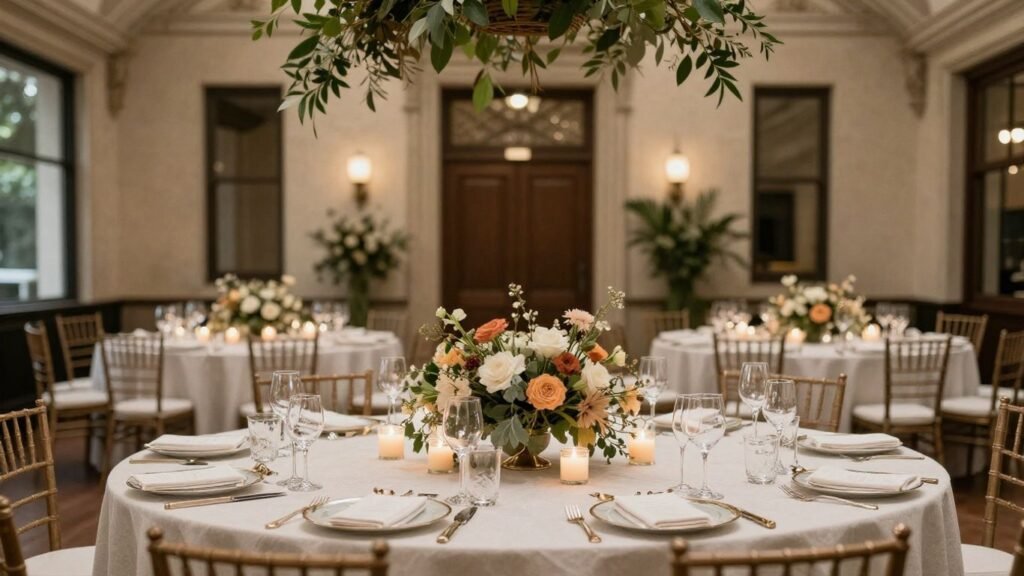
Key Takeaways
Reception flowers should feel connected to your venue, season, color palette, and the way guests will use the space.
- Start with the mood and practical needs of the reception.
- Choose seasonal flowers before becoming attached to one exact bloom.
- Put more of the budget into features guests will notice in photographs.
- Give your florist a clear brief and room for sensible substitutions.
- Keep arrangements comfortable, conversational, and easy to repurpose.
Define your reception flower vision
The best reception flowers do more than fill empty spaces. They help establish the mood of the meal, frame the important photographs, and make a venue feel considered rather than decorated at random. Before collecting flower names, decide how you want guests to feel when they enter the room.
Match flowers to your wedding style
Begin with the overall character of the wedding. A relaxed garden reception may suit loose seasonal stems, while a formal ballroom can carry sculptural arrangements, abundant foliage, or restrained monochromatic designs. Your florist can translate words such as romantic, modern, coastal, or vintage into flower shapes and textures rather than simply repeating them as a color scheme.
A useful reference point is the idea of intentional romantic living: fewer decorative decisions, but more meaning behind the ones you keep. That approach works well when you want the flowers to feel personal without making every surface compete for attention.
Build a color palette that photographs well
Choose two or three principal colors, then add a neutral and a foliage tone. Consider the venue’s carpet, walls, chairs, linen, and existing lighting, since a color that looks soft in daylight may appear much stronger under warm evening lights. Photographic consistency matters more than matching every flower exactly.
Ask to see examples in conditions similar to your reception, and think about how the palette will sit beside suits, dresses, menus, and glassware. Pale flowers may need darker foliage or textured vessels to remain visible in wide photographs.
Balance statement arrangements with subtle details
A room usually benefits from a visual hierarchy. Choose one or two major features, such as the head table, entrance, or dance-floor installation, and let the remaining arrangements support them with a simpler scale. Repeating a small detail—such as one foliage type or a single accent bloom—can make the design feel cohesive without making it repetitive.
The same principle applies to printed details and styling references. If you are gathering ideas from a romance cover guide, focus on composition, color relationships, and the way the eye moves through an image rather than copying a particular design.
Use your venue as a source of inspiration
Look at the architecture before selecting the flowers. High ceilings may invite a suspended installation, while a low, intimate room often looks better with low arrangements and carefully placed vertical accents. Existing timber, stone, exposed brick, or garden views can provide a more convincing palette than a trend board.
Visit the venue at the reception time if possible. Notice where guests enter, where natural light falls, and which areas need softening or emphasis. These observations will help you spend on flowers that solve a real design problem.
Choose flowers that suit Melbourne’s seasons
Seasonality affects availability, quality, and price, so it deserves attention early in the planning process. Melbourne’s changing conditions can also affect how flowers travel and hold up between delivery and the end of the reception. A flexible brief usually produces a more beautiful result than insisting on one unavailable variety.
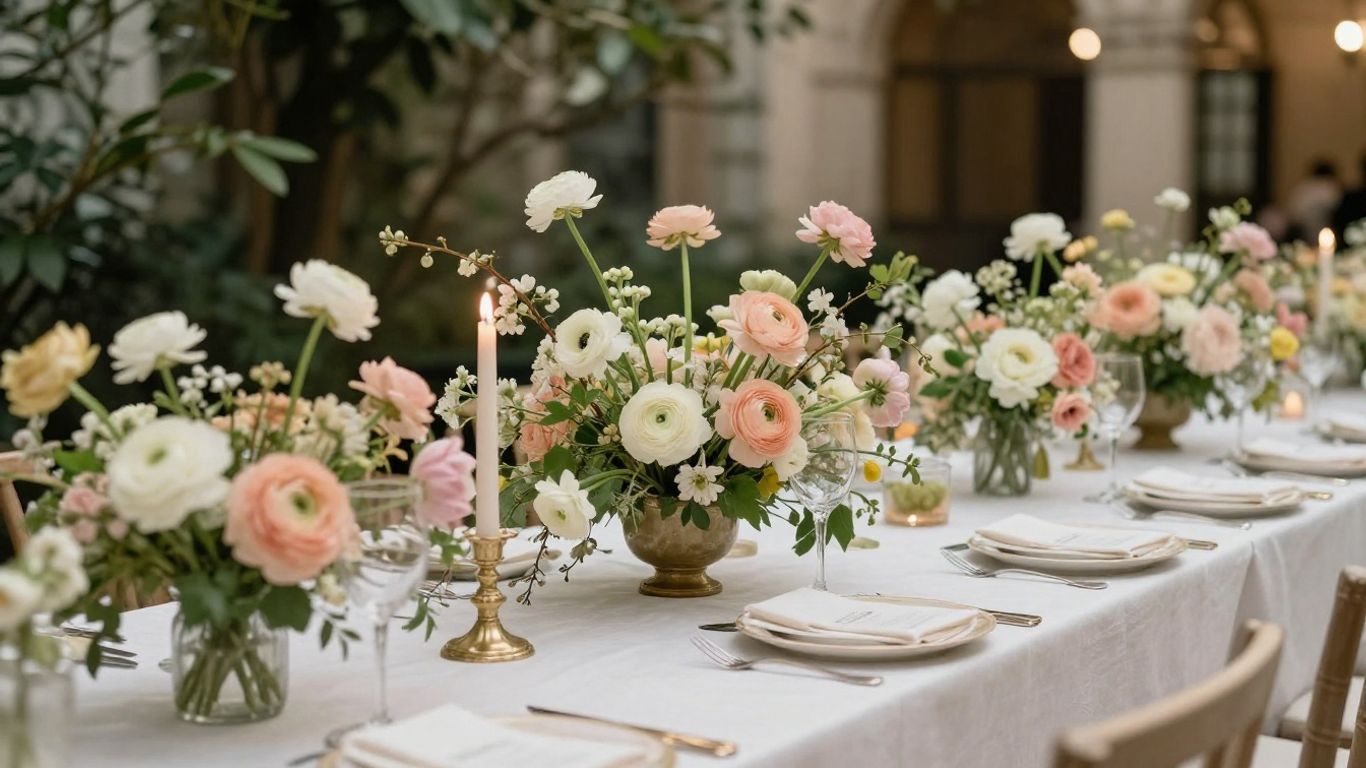
Popular spring flowers for wedding receptions
Spring receptions often suit flowers with a light, fresh character. Consider ranunculus, sweet peas, tulips, flowering branches, anemones, and locally available garden-style foliage, depending on the date and supplier. Their varied shapes can create a relaxed arrangement without requiring excessive volume.
Spring weather can still be unpredictable, so discuss transport and storage rather than assuming mild temperatures will solve everything. A seasonal flower guide can help you compare Melbourne seasonal blooms before your consultation.
Summer blooms that handle warm conditions
Summer flowers should be chosen with the venue and timing in mind. Roses, orchids, chrysanthemums, lisianthus, dahlias, and sturdy foliage may work well, but the final choice depends on the specific variety, conditioning, and whether arrangements will sit outdoors. Ask how long flowers can remain in place before guests arrive.
For warm-weather celebrations, shade, water access, and delivery timing can matter as much as the flower list. Build a little flexibility into the design so your florist can replace a delicate bloom if conditions make it unsuitable.
Autumn and winter flower options
Autumn lends itself to deeper tones, berries, textural foliage, dahlias, chrysanthemums, and warm neutral flowers. Winter can be elegant with hellebores, roses, orchids, tulips, branches, and layered foliage, although availability will vary. Rather than forcing a summer look into a cold-season room, use the season’s natural shapes to make the design feel deliberate.
A restrained winter palette can be especially effective under candlelight. Darker vessels, warm linen, and reflective glass may add richness without requiring larger arrangements.
When imported flowers may be worth considering
Imported flowers can make sense when a particular form or color is central to the design and a suitable local alternative is unlikely. They may also help with a date-specific request, but they can involve greater cost and uncertainty. Ask where the flowers come from, how substitutions are handled, and whether the look can be recreated with locally available varieties.
The decision should be based on the whole design rather than one photograph. A skilled florist can often preserve the silhouette, texture, or color of a favorite flower while changing the exact stem.
Plan arrangements for every reception area
Walk through the reception as a guest would. The entrance sets the first impression, tables shape the meal, and the bar or dance floor may become a gathering point later in the night. Planning by area prevents the common mistake of spending heavily on centerpieces while leaving the most photographed spaces visually unfinished.
Centerpieces for guest tables
Centerpieces should suit the table shape and leave enough room for plates, glasses, candles, and conversation. Low arrangements are reliable for long tables, while carefully raised designs can work when they are narrow and stable. Confirm the finished height with your florist, not just the height of the vase.
Use a mix of sizes if the room needs movement, but repeat enough elements to keep the tables related. A few well-shaped stems in smaller vessels can feel more generous than one crowded arrangement surrounded by empty tableware.
Feature flowers for the head table
The head table is often a natural place for a stronger floral moment because it appears in speeches and couple portraits. Flowers can run along the front, gather at the ends, or frame a backdrop, depending on the furniture and sightlines. Keep the arrangement from hiding the people seated behind it.
If the couple is using a sweetheart table, a concentrated design may be enough. For a long bridal table, distribute flowers so the feature reads from both the room and the camera position.
Flowers for the entry, bar, and welcome table
Small transitional arrangements can make the room feel finished. A welcoming cluster at the entry, flowers beside the seating chart, and a modest bar arrangement often deliver more value than adding another identical centerpiece. These pieces should be easy to move if the venue changes the flow during service.
When comparing possible designs, keep the guest experience in view. Even a charming arrangement is not useful if it narrows a walkway, obscures a menu, or competes with the food and drinks.
Installations for ceilings, walls, and dance floors
Large installations require early coordination with the venue, because rigging, access, weight limits, and removal may all affect the plan. Suspended flowers, floral walls, and dance-floor framing can be striking, but they should respond to the room’s proportions rather than being added simply because space remains.
A practical installation brief should cover the attachment method, setup window, lighting, guest clearance, and end-of-night removal. It is also worth reviewing freight planning considerations if unusual materials or items need to arrive from overseas, while keeping the floral design itself under the florist’s direction.
Set a realistic reception flower budget
Flower budgets become easier to manage when they are attached to specific outcomes. Instead of asking only what a centerpiece costs, consider how many tables need one, which areas require delivery access, and whether a design can be moved after the ceremony. Seasonal availability and the complexity of setup can shift an estimate considerably.
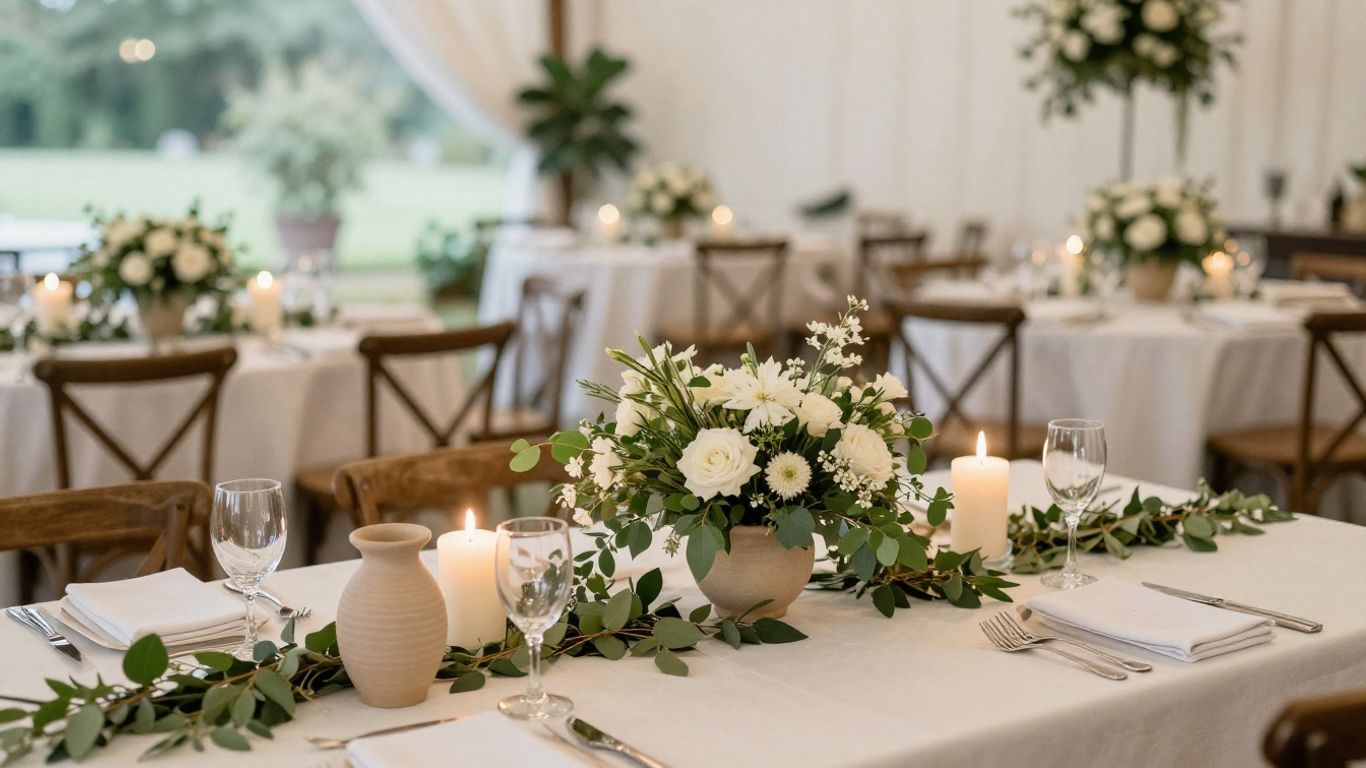
Estimate costs by arrangement type
Ask for an itemized estimate that separates flowers, vessels, labor, delivery, installation, and removal. This makes it easier to compare proposals that use different assumptions. A broad wedding flower budget guide may offer a starting point, but your venue, guest count, flower choices, and installation needs will determine the actual figure.
A simple planning table can help you see where the money is going before you approve the design:
| Arrangement area | Main cost drivers | Budget question |
|---|---|---|
| Guest tables | Quantity, size, vessels | Can pieces be moved or reused? |
| Head table | Length, density, mechanics | Is this a key photo location? |
| Entry and bar | Number of small features | Which areas greet or hold guests? |
| Installations | Labor, access, rigging | Does the venue permit the design? |
Once the categories are visible, you can adjust scale rather than making last-minute cuts across the entire room. That usually protects the overall look.
Prioritize high-impact floral features
Choose features according to how guests move through the venue and where photographs will be taken. A strong head-table arrangement, attractive entrance, or well-designed ceremony piece may have more impact than upgrading every guest table by the same amount. Decide which two or three moments deserve the most attention.
You can also vary scale intentionally. Repeated bud vases, candles, and foliage may provide atmosphere on guest tables while the larger floral budget goes toward one memorable focal point.
Account for delivery, setup, and removal
The quote should explain when flowers arrive, who places them, how long installation takes, and what happens to vessels afterward. Ask whether stairs, parking restrictions, venue access windows, or late-night collection create additional labor. These details are easy to overlook because they are not visible in an inspiration photograph.
Confirm who is responsible for moving ceremony flowers and whether the venue needs a cleanup plan. Clear logistics protect both the flowers and your reception schedule.
Reduce costs without making the décor feel sparse
Savings are often possible through repetition, seasonal flowers, reusable vessels, and selective decoration. Use foliage to create shape, place fuller designs at the most visible tables, and keep less prominent areas simple. Avoid cutting every arrangement slightly; a clear difference between feature and supporting pieces can look more intentional.
You may also ask for alternatives that preserve a favorite color or texture. The goal is not to make every surface floral, but to give the room a rhythm that feels complete.
Work effectively with a Melbourne florist
A productive consultation is a two-way design conversation. Bring the wedding date, venue information, guest count, table plan, photographs, and a realistic budget range. The more clearly you explain the feeling and practical limits, the more useful the florist’s recommendations will be.
What to include in your initial consultation
Prepare a short brief covering the reception style, colors, favorite and disliked flowers, venue restrictions, estimated table count, and the areas you want decorated. Include photographs of the room from several angles, not only styled images. Mention cultural, accessibility, scent, or allergy considerations early.
It can also help to bring your stationery, linen, or dress color references. These details give the florist a better sense of proportion than a collection of unrelated floral photographs.
Questions to ask about availability and substitutions
Ask which flowers are likely to be available for your date, which choices are weather-sensitive, and how substitutions are approved. Find out whether the replacement will match the original color, shape, texture, or price. You can also ask how flowers are conditioned and stored before delivery.
If you are considering unusual sourcing, keep the specification and transport plan clear; a supplier and shipping checklist illustrates why product details and delivery arrangements should be considered together. For venue research, separate Melbourne, Australia results from pages about Melbourne, Florida florists, since they serve different markets.
How to compare quotes and package options
Compare like with like. One quote may include delivery and vessel hire while another lists only the flowers, so the lower headline number may not represent a lower final cost. Look for quantities, dimensions, flower assumptions, labor, setup, breakdown, tax, and cancellation terms.
A package can be useful when it reflects your actual reception, but customization may be better if you need only a few high-impact features. Ask the florist to explain what changes when you add or remove each item.
When to book your wedding florist
Book once your date and venue are reasonably secure, especially for a popular season or a design involving extensive labor. Earlier conversations give you more time to test a palette, compare options, and make substitutions without pressure. You do not need every flower selected at the first meeting, but you do need enough information for the florist to assess the brief.
A signed agreement should record the date, services, payment schedule, design scope, substitution approach, and access responsibilities. Keep a copy with your wider wedding planning documents.
Make reception flowers practical and memorable
Beautiful flowers should make the reception easier to enjoy, not create obstacles for guests or staff. Think about sightlines, movement, lighting, food service, and what happens when the formalities end. Practical decisions often improve the design because they remove clutter and make the important features clearer.
Select arrangements that do not block conversation
Guests should be able to see across the table without leaning around a vase or branch. Check the sightline from a seated position and consider the width of the table as well as the height of the arrangement. Narrower designs may be better than smaller ones if the table is crowded.
Leave space for shared dishes, menus, and drinks. If a centerpiece must be moved during dinner, make sure it is stable and easy for venue staff to handle.
Consider scent, allergies, and guest comfort
Strong fragrance can be unpleasant in a room where guests are eating, particularly when arrangements sit close to plates. Tell your florist about known allergies and consider low-scent varieties for dining tables. Avoid delicate petals that shed heavily over food or clothing.
Ask whether the flowers require water changes, refrigeration, or special handling during the event. Guest comfort is part of the floral brief, not an afterthought.
Coordinate flowers with lighting and table settings
Flowers can look entirely different under amber, colored, or low-level lighting. Review the palette alongside candles, napkins, glassware, and table surfaces so the arrangement does not disappear into the setting. Reflective vessels may brighten a dark room, while matte ceramics can soften a bright one.
If possible, show your florist and lighting supplier the same room photographs. Coordinating these choices early helps preserve the color and texture you selected during the day.
Repurpose ceremony flowers during the reception
Ceremony arrangements can often move to the entrance, head table, bar, or lounge area, provided the timing and mechanics allow it. Discuss the relocation plan before the wedding, including who moves each piece and whether it needs a refreshed water source or new vessel.
Choose ceremony designs with repurposing in mind if the budget is tight. A well-built arrangement that serves two moments may be more valuable than separate, smaller pieces that are used only once.
Conclusion
The most successful reception flowers Melbourne couples choose are not necessarily the largest or rarest. They are the flowers that suit the season, respect the venue, support the guest experience, and express the couple’s style with a clear sense of proportion. Start with the mood, plan the practical details, and give your florist enough information to turn the brief into something fresh and personal.
Frequently Asked Questions
How far in advance should I book a wedding florist?
Book once your venue and date are confirmed, with extra lead time for peak seasons, large installations, or unusual flower requests. An early consultation also leaves room for design changes.
How much should reception flowers cost?
Costs vary with guest count, flower type, arrangement size, labor, delivery, setup, and installation. Request an itemized quote so you can compare the total service rather than a single flower price.
Which flowers are best for a Melbourne reception?
The best choice depends on the wedding date, venue conditions, palette, and design style. Seasonal flowers are often a practical starting point, with suitable alternatives available when a preferred bloom is unavailable.
Should table centerpieces be tall or low?
Low arrangements usually make conversation easier, while tall designs can work when their width and stability are carefully managed. Check the sightline from a seated position before making a final decision.
Can ceremony flowers be reused at the reception?
Often they can, but the plan must account for timing, transport, vessels, water, and venue access. Ask who will move the arrangements and where each piece will be placed.
How can I save money on reception flowers?
Prioritize a few highly visible features, use seasonal varieties, repeat vessels, and simplify less prominent areas. A clear hierarchy generally looks more intentional than reducing every arrangement equally.
What should I bring to a florist consultation?
Bring the date, venue photographs, guest and table estimates, color references, inspiration images, budget range, and any scent or allergy concerns. A short list of favorite and disliked flowers is useful too.