
Key Takeaways
Ceremony flowers should feel connected to the venue, season, and overall wedding style rather than added as an afterthought.
- Start with the mood, colour palette, and ceremony backdrop.
- Choose flowers that suit Melbourne’s season and Altona’s outdoor conditions.
- Spend most of the budget on arrangements guests will notice first.
- Confirm delivery, setup, weather, and flower substitutions in writing.
- Book a florist early enough to secure the right date and design support.
Define your ceremony flower vision
Before choosing stems, decide how you want the ceremony to feel. A relaxed garden wedding may call for loose movement and plenty of foliage, while a formal indoor ceremony may suit cleaner lines and restrained colour. The best ceremony flowers Altona couples choose usually connect several details at once: the outfit, venue, season, and photographs.
Match flowers to your wedding theme
Your theme does not need to be a strict category, but it helps to name its character. Romantic, coastal, modern, botanical, rustic, and classic styles each suggest different shapes and finishes. Look at your stationery, bridesmaid fabrics, and venue furniture together, then choose flowers that repeat one or two visual ideas rather than introducing a new style at every turn.
For inspiration, browse examples of wedding floral designs in varied colours and shapes, but use photographs as a starting point rather than a promise of identical flowers. Availability, season, and your florist’s design approach will all affect the final result.
Choose a cohesive colour palette
Begin with two or three main colours and one quieter neutral. White, cream, soft green, blush, terracotta, lavender, and blue can be combined in many ways, but the balance matters more than the exact shades. Ask your florist to describe the palette in practical terms, such as warm whites with apricot accents, so everyone is imagining the same thing.
It is also worth checking how colours will look against the ceremony backdrop. A pale bouquet can disappear in bright outdoor light, while very deep flowers may look heavy in a small hall. Sample fabric swatches or photographs of the venue can make this conversation much easier.
Consider the ceremony setting and backdrop
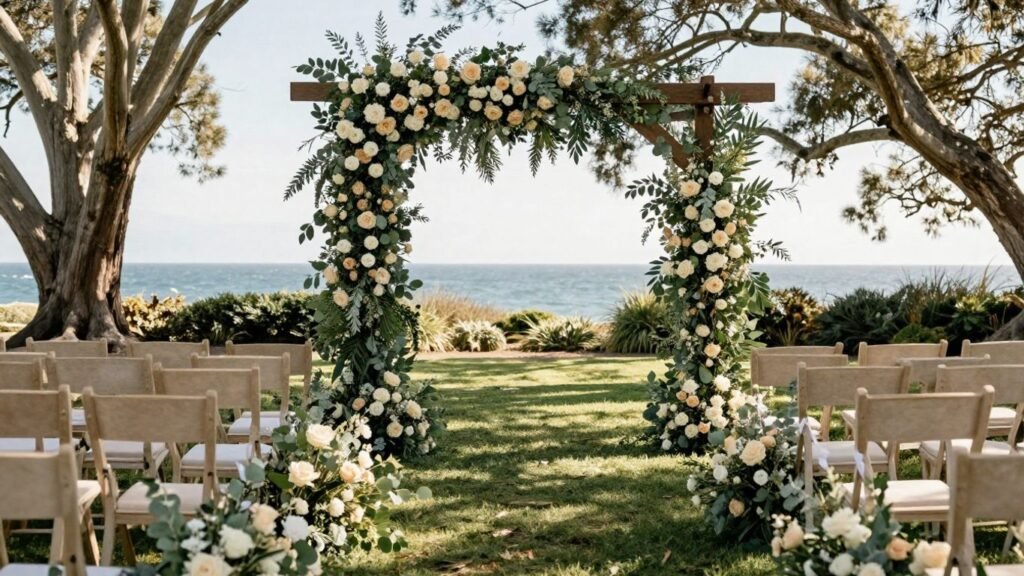
The venue should guide the scale and shape of your flowers. A wide arbor can carry generous foliage and flowers, whereas a narrow signing table may need only a low arrangement. Think about what will sit behind the couple, where guests will be seated, and how much of the ceremony will be visible in photographs.
A beachfront setting brings open sky, sand, and movement into the composition. An indoor venue gives you more control over temperature and wind, but existing walls, timber, carpet, or stained glass may already provide strong visual detail. Flowers should work with those features, not compete with them.
Balance statement arrangements with simple details
One memorable installation can often do more than many small arrangements scattered around the room. Consider concentrating flowers at the arbor, signing table, or entrance, then echoing the same foliage or colour in the bouquet and aisle details. This creates rhythm without making the ceremony feel crowded.
A clear visual hierarchy also helps with spending. Choose the one or two floral moments that matter most to you, and let the remaining details be quieter, lighter, or foliage-led.
Choose the right flowers for an Altona ceremony
Altona ceremonies may be held in gardens, halls, churches, private venues, or locations influenced by coastal weather. That variety makes flower selection a practical decision as well as a stylistic one. Speak with a florist about the date, light, wind exposure, and length of time the arrangements will be out of water before settling on a final recipe.
Popular flowers for bouquets and arbors
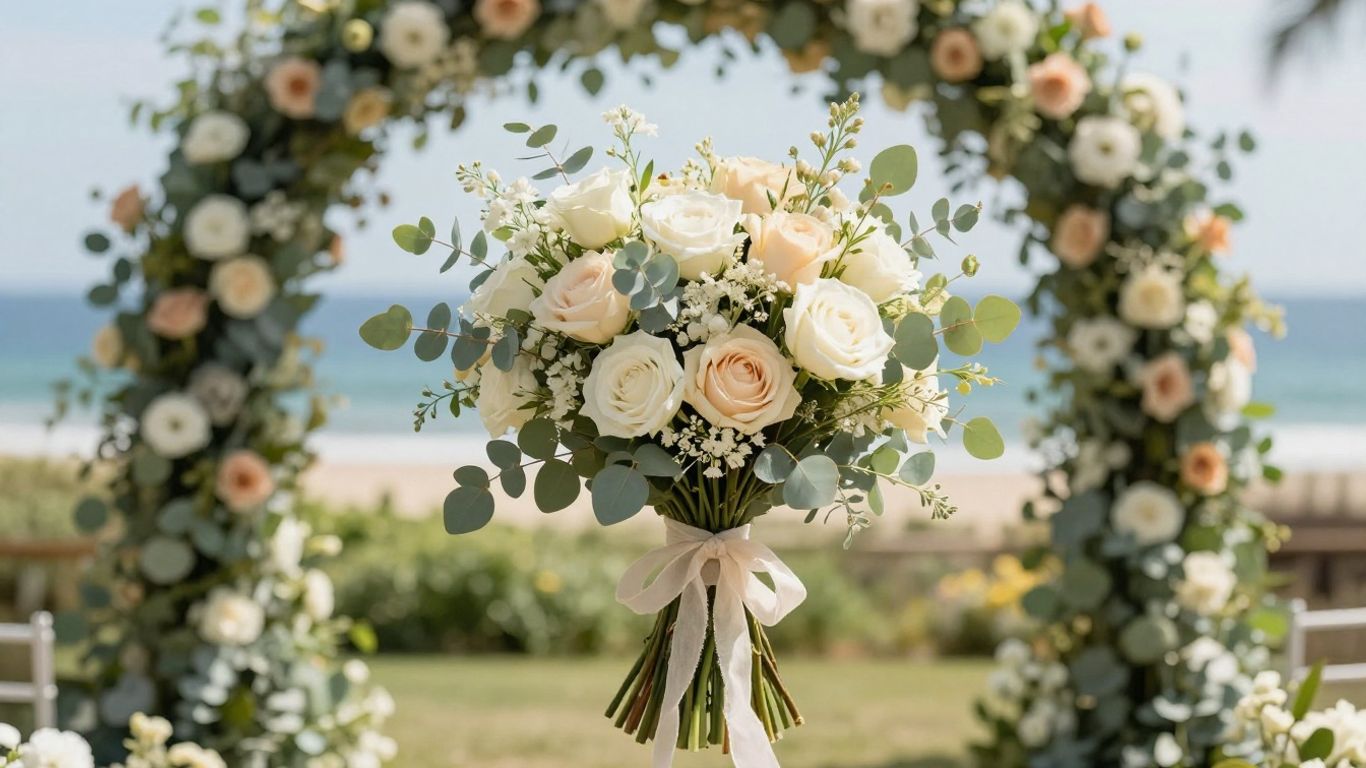
Roses, dahlias, peonies when available, ranunculus, lisianthus, carnations, orchids, and chrysanthemums can all work beautifully in wedding designs. Their effect changes with colour, openness, and how they are grouped. A florist can combine focal flowers with smaller blooms to make an arbor feel abundant without filling every inch.
For a bouquet, consider how the flowers will sit against the dress and how easily they can be carried. An arbor has different needs: stems must read from a distance, hold their shape, and create a pleasing outline in photographs.
Seasonal blooms for Melbourne weddings
Seasonal flowers are often the most sensible starting point for a Melbourne wedding. They are more likely to be available at good quality and can give the designs a natural connection to the time of year. Ask which flowers will be at their best for your date, then keep a short list of alternatives rather than insisting on a single variety.
A seasonal approach does not mean giving up your preferred look. Colour, silhouette, and texture can usually be recreated with different flowers, even when a particular bloom is unavailable. The Altona wedding florist directory can also help you compare local design styles before consultations.
Hardy flowers for warm or windy conditions
Outdoor arrangements need to cope with sun, wind, and time away from refrigeration. Flowers with sturdy stems and foliage that does not wilt quickly are often safer choices for exposed locations. Your florist may recommend a protected arbor design, water sources hidden within arrangements, or smaller installations that are easier to secure.
Do not judge a flower’s suitability from appearance alone. Ask how long it can remain presentable, whether it needs shade, and what happens if the forecast changes. A beautiful design that cannot tolerate the venue conditions will create unnecessary stress on the day.
Foliage and filler flowers that add texture
Foliage gives arrangements volume, movement, and a finished outline. Eucalyptus, olive, ruscus, fern, jasmine vine, and other greenery can make a design feel airy or abundant depending on how they are placed. Filler flowers such as waxflower, astrantia, limonium, and small sprays can bridge gaps between larger blooms.
Texture is especially useful when the colour palette is restrained. Different leaf shapes and flower sizes keep white, cream, or green arrangements from looking flat. Ask to see examples where foliage is a visible design element rather than merely a background.
Plan flowers for different ceremony settings
The same floral plan will not suit every venue. Indoor spaces require attention to sightlines, floor protection, and existing decoration, while outdoor ceremonies require stronger planning around weather and installation. Walk through the venue with your florist if possible, or provide clear photographs from the guest and couple’s viewpoints.
Indoor arrangements for churches and halls
Indoor ceremonies often benefit from arrangements that respect the architecture. Low flowers can keep the aisle open, while taller designs may frame the altar or celebrant without blocking faces. In churches and halls, check whether candles, pew decorations, or hanging installations are permitted before finalising the design.
Also ask about access to power, lifts, loading areas, and floor coverings. A florist may need to protect polished floors or bring weighted vessels, particularly when large arrangements are installed near guest movement.
Outdoor flowers for gardens and beachfront venues
Outdoor flowers should be planned around the sun’s direction, wind exposure, and the ceremony’s expected duration. Positioning the couple with the sun behind or to the side can affect how colours and flowers appear in photographs. A shaded waiting area and containers of water are useful when bouquets or buttonholes need to remain fresh before the ceremony.
For a coastal venue, secure every freestanding arrangement and avoid designs with delicate petals in the most exposed locations. Keep a sheltered alternative in mind rather than assuming the weather will cooperate.
Floral designs for arches and ceremony backdrops
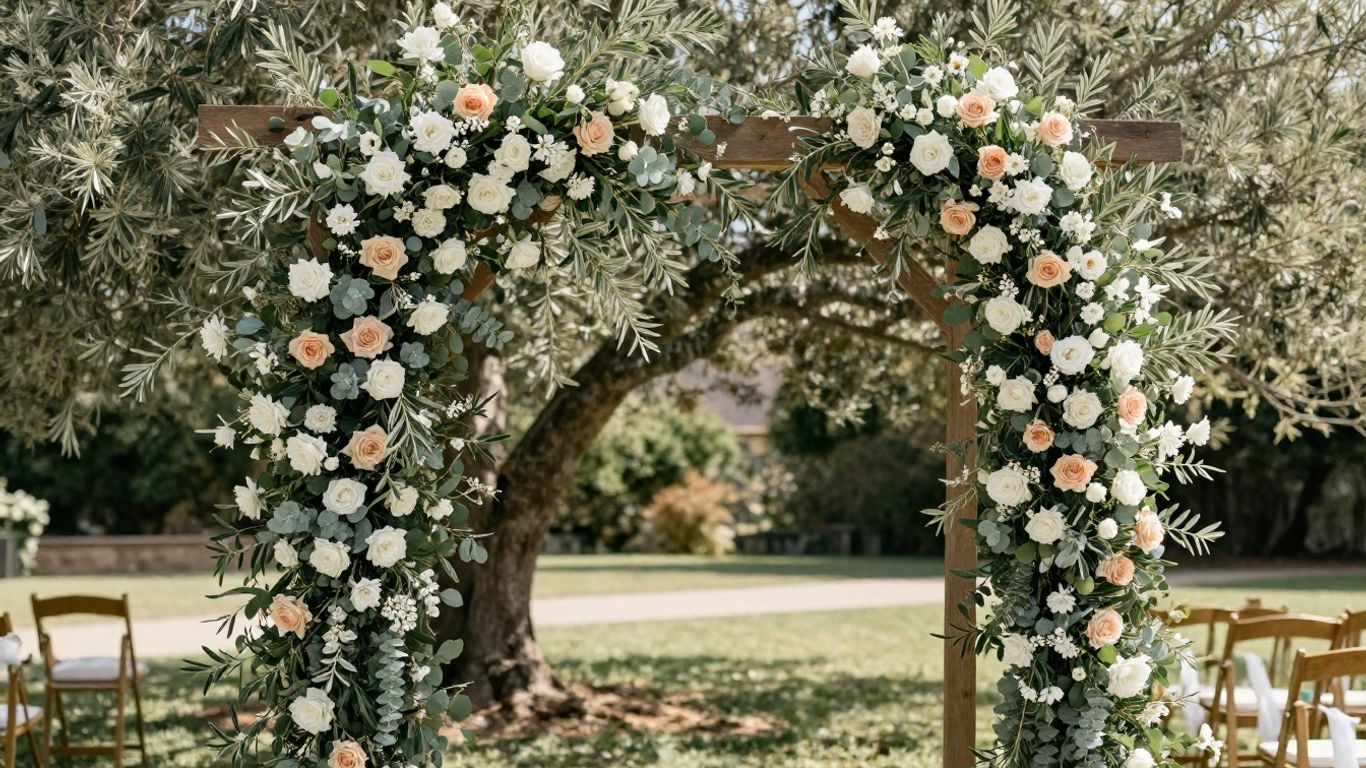
An arbor or arch creates a natural focal point, but it does not always need to be covered completely. Flowers grouped to one side can feel modern and leave the structure visible, while asymmetrical clusters can add movement. A full design may suit a more traditional celebration, though it will usually require more flowers, mechanics, transport, and setup time.
Ask how the installation will be attached and removed. The structure, anchoring method, and venue rules all affect the quote, so these details should be discussed before you fall in love with a particular photograph.
Aisle markers, pew flowers, and welcome arrangements
Small details can guide guests and make the ceremony feel considered. Aisle markers may be tied to chairs, placed in small vessels, or created with foliage rather than fresh flowers. Welcome arrangements can also do double duty by greeting guests before the ceremony and moving to the signing table later.
When deciding how many details to include, focus on the views guests will actually have. A few well-placed markers usually photograph better than a long row of identical pieces that compete with the aisle and outfits.
Set a realistic ceremony flower budget
A floral budget is easier to manage when it is built around priorities rather than a single total. The final figure can include flowers, vessels, mechanics, labour, transport, installation, collection, and taxes or service charges. Request an itemised quote so you can see which changes will have the greatest effect.
Understand the main floral cost factors
Flower prices vary with season, availability, size, colour, and the amount of labour required. A loose-looking arrangement can still take considerable time to design, while an arbor may require mechanics and a crew even when the finished result appears effortless.
The venue’s distance and access can matter as well. Stairs, limited loading zones, long walks, and narrow setup windows may increase labour. Rather than comparing only the flower count, compare what is included in the complete service.
Prioritise high-impact arrangements
If the budget is tight, start with the bouquet and the main ceremony backdrop. These are usually central to photographs and establish the tone of the space. You can then reduce aisle markers, choose foliage-led pieces, or use a smaller signing-table arrangement without losing the overall feeling.
A useful way to make decisions is to rank every item as essential, desirable, or optional. Keep the essential pieces intact and adjust the optional details first. This protects the visual story of the ceremony instead of spreading the budget too thinly.
Reuse ceremony flowers at the reception
Ask whether the arbor flowers, signing-table arrangement, welcome piece, or aisle flowers can be moved after the ceremony. Reuse may require extra labour and suitable transport, but it can make a larger arrangement work harder across the day.
The move should be planned rather than improvised. Confirm who will relocate each piece, where it will go, and whether guests will still be in the space when the flowers are being handled. A written reuse plan prevents confusion between the venue, florist, and wedding party.
Allow for delivery, setup, and removal fees
Delivery and setup are part of the service, not minor extras to discover at the end. Ask whether the quote includes arrival, unloading, placement, installation, pack-down, collection of hired vessels, and disposal of floral waste. If the venue has a strict access window, make sure the florist has included the time needed to work safely.
A transparent quote should make the practical side visible. For broader planning, couples sometimes keep separate resources for unrelated decisions, such as mortgage renewal planning, alternative investment choices, or an international move guide; those topics belong outside the flower budget, but the same habit of checking inclusions is useful.
Find a florist for ceremony flowers in Altona
The right florist should understand your taste and the realities of the venue. Look for portfolios that show complete ceremonies, not only close-up bouquets, and notice whether the designs feel consistent while still adapting to different couples. Local knowledge can be helpful when delivery routes, coastal exposure, or venue access affect the plan.
What to look for in a local wedding florist
Choose someone who listens carefully, explains substitutions clearly, and can describe how a design will be built. A strong portfolio should show varied scales, colour palettes, and ceremony settings. It is also worth checking whether the florist handles setup personally or coordinates a separate team.
Reviews can provide clues about communication and punctuality, but read them alongside the portfolio and quote. The cheapest option is not automatically the best value if it leaves installation, vessels, or removal unclear.
Questions to ask during your consultation
Bring your date, venue details, estimated guest count, ceremony time, and a realistic budget range. Explain what you already know and what you are undecided about. A good consultation should leave you with clearer options rather than a longer list of flowers to research.
Useful questions include:
- Which flowers are likely to be in season on our date?
- How will the designs be protected from heat or wind?
- What is included in delivery, setup, relocation, and removal?
- What substitutions would you make if a flower is unavailable?
The answers will show whether the florist is thinking about the whole event, not just the appearance of a single arrangement. They also give you language to use when comparing proposals.
How to compare quotes and floral packages
Place quotes side by side and separate the design from the logistics. One package may include vessels, installation, and pack-down, while another may list only the flowers. Check quantities, arrangement sizes, flower varieties, labour, delivery, hire items, tax, and cancellation terms.
A package can be useful when you want a simpler decision, but it should still be adaptable to your venue. Ask what can be changed and whether substitutions alter the price. Keep the final quote with an image or written description of the agreed style.
When to book your florist
Popular wedding dates can fill well ahead of time, particularly during the busiest seasons. Booking early gives you more room to discuss design, source specialty flowers, and coordinate with the venue. You do not need every detail finished at the first enquiry, but you should have a date, location, and approximate scope.
Once booked, schedule a later design confirmation when the dress, attire, stationery, and venue details are more settled. This is when the broad vision becomes a precise order.
Organise the details before the wedding day
A calm flower plan is mostly a clear communication plan. Keep one document with the order, delivery address, venue contact, setup window, design notes, and contingency decisions. Send updates promptly when the ceremony time or layout changes, since small changes can affect transport and labour.
Create a complete flower order
List every item, including personal flowers, ceremony arrangements, rented vessels, installation pieces, and items that will be moved later. Add colours, preferred flower types, approximate sizes, quantities, and the person responsible for receiving each delivery. This document should be understandable to someone who was not in the original consultation.
If your planning folder includes unrelated business checks, keep them separate; for example, AML due diligence services concern financial compliance rather than wedding flowers. Likewise, a fragrance exploration app may be useful for a different kind of personal preference, but neither belongs in the florist’s order.
Confirm venue access and setup requirements
Ask the venue when the florist may arrive, where the vehicle can unload, and whether someone will open gates or doors. Confirm restrictions on attaching items to walls, placing water on floors, using candles, or bringing in external structures. Give the florist a direct venue contact for questions on the day.
These details are easy to overlook when the visual design is taking up most of your attention. A short access walkthrough can prevent delays and ensure the flowers are ready before guests begin arriving.
Plan care and transport for fresh flowers
Bouquets and buttonholes should remain cool and protected until they are needed. Ask how they will be transported, where they will be stored, and whether the venue has a suitable shaded or refrigerated area. Do not leave delicate flowers in a hot parked car, even for a short period.
The wedding party should also know where personal flowers will be delivered and who will distribute them. Simple labels or a small handover list can save time when everyone is getting ready.
Finalise timing, substitutions, and weather contingencies
Confirm the final guest count, ceremony layout, setup time, photography schedule, and rain or wind plan several weeks before the wedding. Your florist should explain which flowers may be substituted and whether the overall colour, shape, and texture will remain consistent. Make sure the venue and celebrant know about any revised location or access timing.
A weather plan is not a prediction; it is a decision made in advance. Whether that means moving indoors, adding weights, reducing exposed arrangements, or protecting flowers until the last moment, clarity will make the day feel much more manageable.
Conclusion
Beautiful ceremony flowers Altona couples can enjoy are the result of thoughtful choices made early: a clear visual direction, flowers suited to the season and setting, a budget built around impact, and a florist who understands the practical work behind the design. With the details confirmed in writing, your flowers can feel natural, personal, and ready for the moments that matter.
Frequently Asked Questions
How far in advance should I book ceremony flowers?
Booking several months ahead is sensible, especially for popular dates or larger installations. Early conversations give you more choice of florist, flowers, and setup support.
Which flowers are best for a Melbourne wedding?
The best choice depends on your wedding date, venue, colour palette, and design. Seasonal flowers are usually a practical starting point, with suitable alternatives planned in case availability changes.
How much should I budget for ceremony flowers?
There is no single useful figure because bouquets, arches, aisle details, delivery, labour, and removal all affect the total. An itemised quote will help you decide where to spend and where to simplify.
Can ceremony flowers be reused at the reception?
Often they can, provided the arrangements are designed for safe movement and someone is responsible for relocating them. Confirm the timing, labour, and destination with the florist and venue.
How can I protect flowers at an outdoor ceremony?
Choose varieties suited to the conditions, keep personal flowers cool, secure freestanding structures, and prepare a shaded or indoor alternative. Wind and direct sun should be considered during the initial design.
What should a florist quote include?
Look for the flowers, arrangement quantities and sizes, vessels or hire items, delivery, setup, installation, relocation, removal, taxes, and substitution terms. Comparing these inclusions is more useful than comparing flower counts alone.
What happens if my preferred flower is unavailable?
A professional florist should suggest a substitute that maintains the intended colour, form, and texture. Agree on the substitution approach before the wedding day so the decision does not become a last-minute worry.