
Key Takeaways
Beautiful wedding flowers begin with a clear style, a practical plan, and an honest conversation about budget. Use the guide below to make decisions that feel personal without becoming difficult to manage.
- Start with your venue, dress, color palette, and overall wedding mood.
- Choose a bouquet shape that suits both your outfit and your comfort.
- Plan ceremony and reception flowers together so arrangements can be reused.
- Ask for a detailed quote that includes delivery, setup, hire items, and pack-down.
- Confirm substitutions, timings, responsibilities, and communication before the wedding week.
Define your wedding flower style and priorities
Your flowers should feel connected to the setting rather than placed on top of it. Consider the architecture, natural light, furniture, and scale of the venue before choosing individual stems. A relaxed garden celebration may suit loose, seasonal arrangements, while a formal reception can carry more structured shapes. Begin with the atmosphere you want guests to feel, then select flowers that support it.
Match flowers to your venue and wedding theme
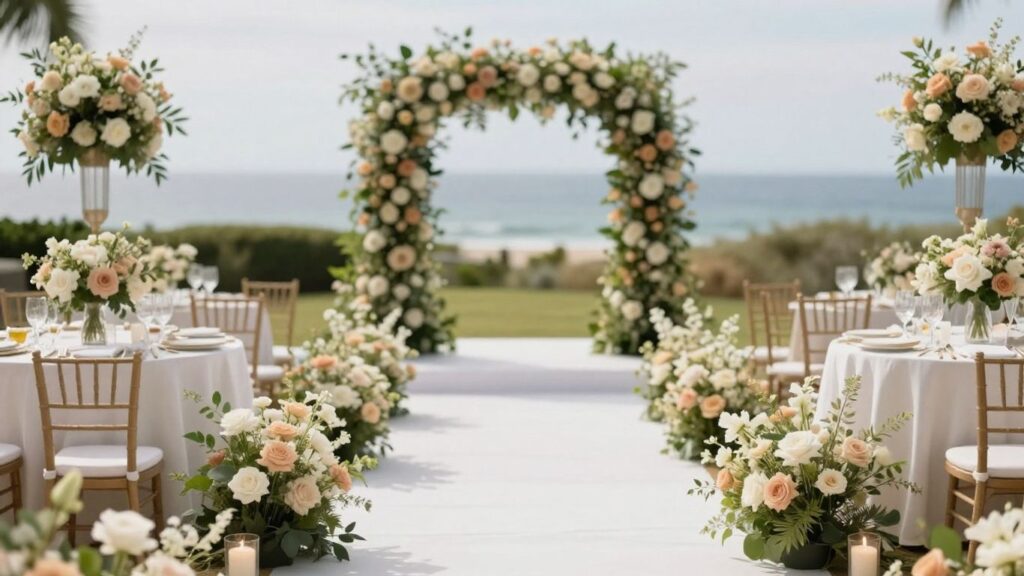
Look at the venue at the time of day your ceremony will take place. Brick, timber, stone, concrete, and painted walls each create a different backdrop, and a bouquet that looks soft in a studio may appear flat against a darker interior. Coastal spaces can handle airy textures, while grand rooms often benefit from stronger silhouettes and taller arrangements.
Think beyond the ceremony room. The walk from the entrance to the aisle, the view behind the couple, and the shape of the reception tables all influence how much floral detail is needed. A small number of well-placed arrangements can often do more than flowers scattered evenly throughout a large space.
Choose a colour palette that photographs well
Choose two or three main colors, then add one or two supporting tones rather than asking every flower to match exactly. Cream, blush, peach, pale blue, and soft green can blend beautifully, but they need enough contrast to remain visible in photographs. Ask your florist how the palette will change in natural shade, warm indoor lighting, and flash photography.
Printed materials and bridesmaid dresses are useful palette references, but do not rely on a tiny color swatch alone. Fabric, paper, and petals reflect light differently. If you are also coordinating beauty details, a guide to wedding makeup trends can help you think about how the flowers, skin tones, and overall styling will appear together.
Balance statement blooms with supporting greenery
Statement flowers create the visual anchors: perhaps a few large dahlias, roses, peonies, or sculptural tropical stems. Supporting flowers add movement and fill gaps, while foliage gives the arrangement shape and rhythm. The most convincing designs usually contain variation in size, texture, and height rather than one repeated bloom from edge to edge.
Greenery should not automatically be treated as filler. Fine foliage can make a bouquet feel light, while broad leaves can give a modern arrangement a stronger outline. Tell your florist whether you prefer an abundant garden look, a restrained editorial shape, or something in between.
Create a realistic must-have flower list
Write down the flowers that matter most to you, but separate emotional favorites from flexible preferences. A must-have list is more useful when it names the feeling or visual quality you want as well as the flower itself. That gives your florist room to suggest alternatives if a particular stem is unavailable or out of season.
A simple priority list can keep the consultation focused:
- Essential flowers or colors you would be disappointed to lose.
- Flexible flowers that can be replaced with a similar shape or tone.
- Important floral moments, such as the bouquet or ceremony backdrop.
- Details that can be reduced if the quote exceeds your comfortable budget.
After you rank these choices, your florist can spend the available money where it will be noticed most. This is also the right stage to save reference images and identify arrangements you definitely do not want.
Choose bridal bouquets for form, comfort, and style
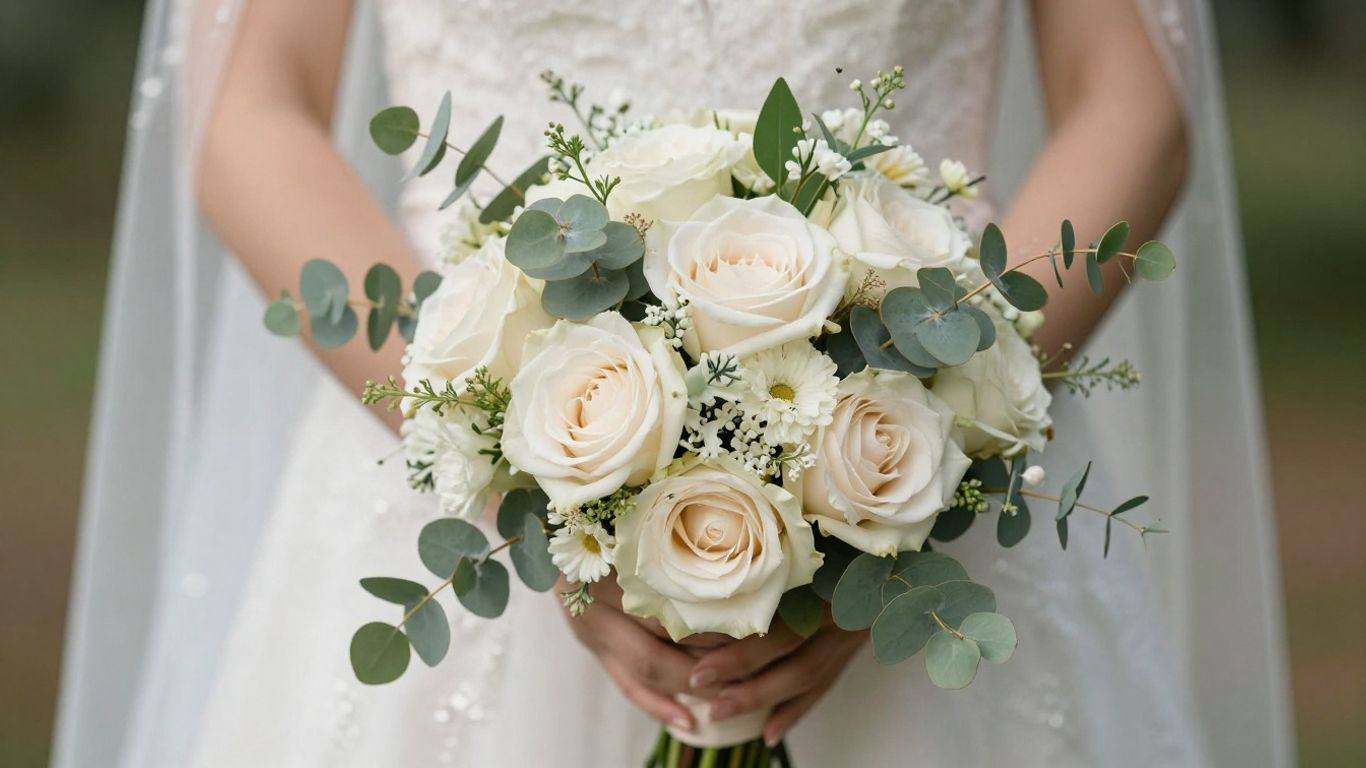
The bridal bouquet is photographed closely, carried for much of the day, and often becomes one of the most personal floral decisions. Its shape should work with the dress, but it also needs to feel natural in your hands. Think about how you will hold it during the ceremony, portraits, greetings, and transport between locations. A beautiful bouquet that is awkward or heavy can become a distraction.
Select a bouquet shape for your wedding dress
A rounded bouquet can complement a clean, fitted gown, while a cascading shape may echo a flowing skirt or veil. Looser hand-tied designs suit relaxed dresses and outdoor celebrations, although they can still be refined through careful color and stem selection. Consider the width of the bouquet in relation to your shoulders and the detail on the bodice.
Bring a photograph of the dress, or a fabric sample if available. The florist can then judge proportion rather than designing from a description alone. The bouquet should frame the outfit, not hide its most meaningful details.
Compare seasonal blooms with year-round alternatives
Seasonal flowers are often a natural starting point because they reflect the time of year and can give the design a sense of place. Their availability can vary, however, so discuss alternatives before the proposal is finalized. A substitute should match the intended color, texture, size, or movement, rather than simply being the nearest flower available.
Ask which flowers are reliable for your wedding date and which are more weather-sensitive. Heat, wind, and long portrait sessions can affect delicate petals. If you want a particular look without depending on one exact bloom, describe the look first and let the florist build a flexible recipe.
Plan bouquets for the bridal party
Bridesmaid bouquets do not need to be identical to the bridal bouquet. They might use the same palette at a smaller scale, repeat one supporting flower, or share foliage while the main bouquet carries the strongest statement blooms. This creates cohesion without making every person’s flowers feel copied.
Also consider the size and height of the people carrying them. A bouquet should look balanced in photographs and remain comfortable through the processional. Small differences in shape can help each bouquet suit its wearer while keeping the group visually connected.
Consider bouquet size, weight, and handling
Ask how the bouquet will be held and stored before the ceremony. A compact hand-tied design is usually easier to carry for a long period, while a larger arrangement may require more deliberate handling. Ribbon, exposed stems, pins, water sources, and packaging all affect comfort and presentation.
Practice holding a mock bouquet or a similar household object at the height you expect to use. Keep one hand relaxed and avoid gripping the stems too tightly. Your florist can also advise on keeping the arrangement cool and hydrated before photographs begin.
Coordinate ceremony and reception flowers
Ceremony and reception flowers should be planned as one visual story. This prevents a floral design from looking beautiful in one room and disconnected in the next. It also makes it easier to identify arrangements that can move after the ceremony. Share the floor plan, ceremony position, table layout, and any venue restrictions early in the process.
Design flowers for the ceremony entrance and aisle
The entrance sets expectations before guests see the couple, so it deserves attention even when the ceremony is simple. A pair of arrangements, a floral marker at the aisle start, or small clusters along the first few rows can establish the palette without decorating every chair. Make sure flowers do not narrow walkways or catch on clothing.
Aisle flowers should be judged from the guest’s seated view and from the photographer’s angle. Low arrangements may disappear behind chairs, while tall pieces can interrupt sightlines. Use the venue’s natural features to decide where added flowers will genuinely improve the space.
Style the signing table and ceremony backdrop
The signing table is often photographed from several directions, so its flowers need to work from the front and sides. Keep enough surface clear for documents, pens, and any required items. A small arrangement or trailing detail may be more practical than a wide centerpiece.
For a backdrop, consider the couple’s position, the ceremony light, and what will remain visible behind the flowers. A concentrated floral feature can be more memorable than a thin line spread across a large structure. Confirm whether the venue supplies the frame, whether hire items are permitted, and who handles removal.
Create centrepieces that suit the reception layout
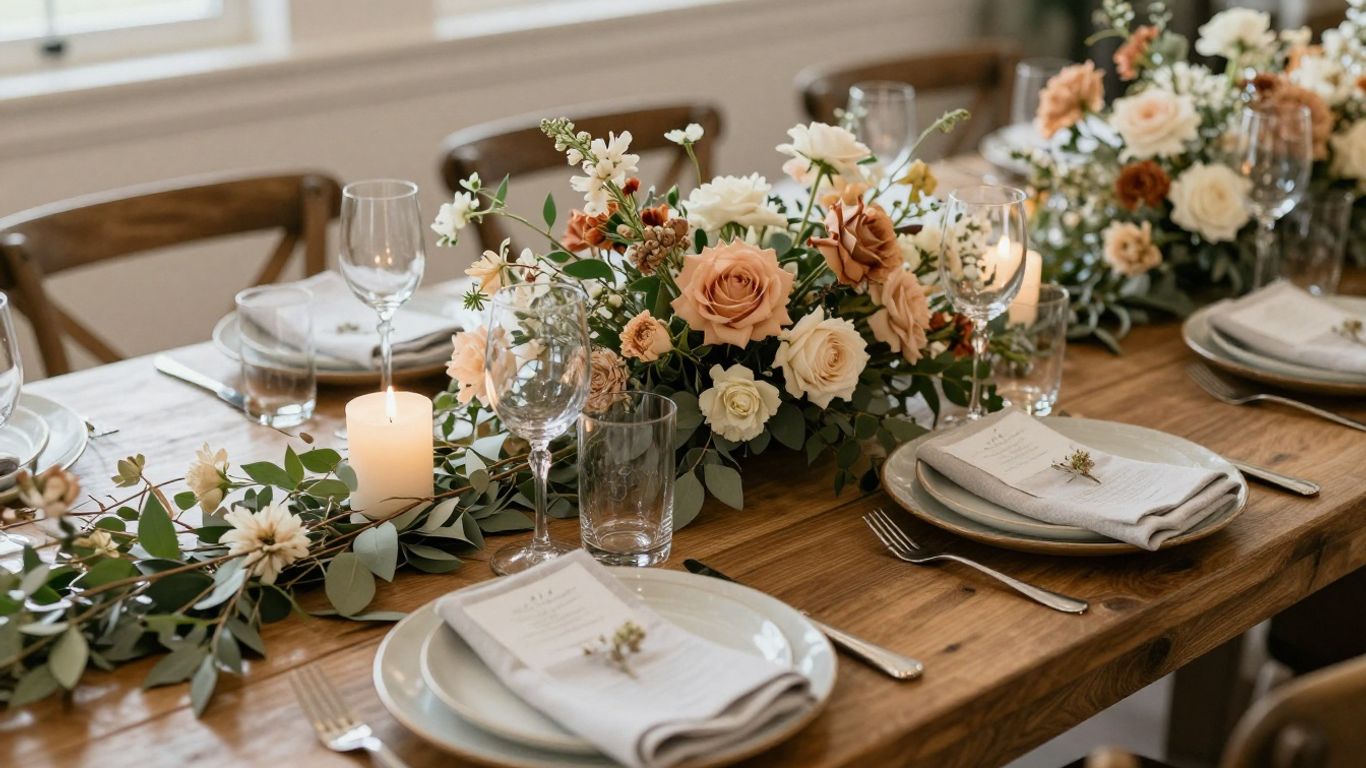
Centrepieces need to fit the tables as carefully as they fit the palette. Long arrangements can suit banquet tables, while low grouped vessels often work better for round tables and allow conversation across the setting. Tall designs can be striking, but only if they do not block guests or compete with lighting and service items.
Use the floor plan to decide quantities instead of estimating from the guest count alone. The following planning table can help translate the room into a floral brief:
| Reception feature | Questions to answer | Possible floral approach |
|---|---|---|
| Guest tables | Round, long, or mixed? | Low vessels, runners, or grouped arrangements |
| Head table | Is it visible from the room? | Focal arrangement with lighter table details |
| Bar or welcome area | Will guests gather there? | One compact statement arrangement |
| Dance floor | What remains visible around it? | Minimal flowers with clear circulation |
Once the layout is clear, your florist can price the right number of arrangements and avoid designing flowers for spaces guests will barely notice. Leave room for menus, candles, glassware, and service access.
Repurpose ceremony flowers to reduce waste
Tell your florist which ceremony pieces may be moved to the reception and who will authorize that change. A ceremony arrangement can become a signing-table display, sweetheart-table detail, or welcome-area feature if it is designed with transport in mind. Some installations are too fixed or delicate to move, so this should never be assumed.
Assign a person or supplier to handle the transition. The wedding party should not have to carry large arrangements while guests are entering the reception. A clear reuse plan can reduce unnecessary spending while keeping the design consistent.
Set a bridal flower budget in Hobsons Bay
A floral budget works best when it is treated as a design framework rather than a last-minute limit. The final price can be influenced by flower choice, scale, mechanics, labor, delivery distance, setup time, and the complexity of the installation. Be candid about your comfortable range during the first conversation. A florist can usually offer better options when they know the boundary early.
Understand the main costs in a wedding flower package
Ask for a proposal that separates flowers from labor and logistics. This makes it easier to understand what changes when you add an arrangement, alter the design, or remove a service. A low starting figure may not include the practical work required to deliver and install everything at the venue.
Clarify whether the quote includes consultation time, conditioning, vessels, structures, delivery, setup, hire collection, and pack-down. If you are researching other wedding suppliers at the same time, keep unrelated product research—such as Tongkat Ali information or Creatine Gummies guidance—in a separate folder so the floral brief remains easy to follow.
Prioritise flowers for high-impact areas
When the budget is tight, prioritize the places that appear in the most photographs or shape the guest experience. The bridal bouquet, ceremony backdrop, signing table, and main reception table are often stronger investments than small details repeated throughout the venue. You can then use candles, fabric, stationery, or venue styling to add atmosphere elsewhere.
Be specific about what can change. You may prefer fewer arrangements with more generous flowers, or more small arrangements using modest seasonal stems. A ranked priority list gives your florist a practical way to adjust the proposal without losing the character of the wedding.
Compare fresh, dried, and artificial flower options
Fresh flowers provide fragrance, natural variation, and a particular sense of occasion, but they require careful timing and hydration. Dried flowers can offer lasting texture and may suit a rustic or modern palette, though some are fragile and not ideal for every outdoor setting. Artificial flowers can be useful for selected installations or keepsakes when their finish is convincing and the hire terms are clear.
You do not need to choose one material for every floral moment. A mixed approach may place fresh flowers where guests are close and use durable materials for a structure or detail that must be prepared earlier. Ask to see samples in person whenever possible.
Allow for delivery, setup, hire items, and pack-down
Delivery and setup are part of the wedding design, not minor extras. Confirm the venue address, access hours, loading conditions, parking, stairs, elevators, refrigeration, and the time arrangements must be installed. If the ceremony and reception are at different locations, ask how the transition affects staffing and fees.
A written responsibility list prevents confusion on the wedding day. Confirm who places personal flowers, who moves ceremony pieces, who returns hired vessels, and who clears arrangements after the event. For any broader supplier research, a financial software overview or offshore generator guide belongs elsewhere; your floral quote should remain specific to flowers and event logistics.
Find the right Hobsons Bay wedding florist
The right florist is not simply the one whose photographs look attractive online. You also need someone whose design approach, communication style, availability, and practical services fit your wedding. Local knowledge can help with timing and access, but it should be checked rather than assumed. Compare proposals on what they include, not only on the headline price.
Check portfolios for similar wedding styles
Look for complete weddings rather than isolated close-ups. A portfolio should show bouquets, ceremony flowers, reception arrangements, and the way the work sits within a real venue. Pay attention to whether the florist can work across different palettes and levels of formality.
Ask whether the images reflect the florist’s own work and whether the examples are recent. A reference photograph can communicate your preferences, but the final design should be original to your venue, season, and budget. You can also use local florist logistics as a reminder to investigate delivery areas and seasonal planning.
Ask about local delivery and venue setup
Confirm whether the florist delivers to your Hobsons Bay venue and whether setup is included. Ask about delivery windows, access requirements, weather contingencies, and the process for a venue with strict bump-in rules. If the florist needs a separate setup team, find out who coordinates with the venue.
Do not leave these questions until the final week. A florist may need to plan refrigeration, transport, structures, and staff around several events. Early clarity makes the wedding-day schedule more realistic.
Review consultations, proposals, and revision policies
A good consultation should leave you with a clearer design direction, not just a list of flowers. The proposal should describe the main arrangements, quantities or scale, colors, substitutions, hire items, and services. Read the revision policy before requesting multiple rounds of changes, particularly if the wedding date is close.
Bring your inspiration images, venue information, dress details, estimated guest count, table sizes, and budget range. The more specific the brief, the easier it is to compare two proposals fairly. If a phrase in the proposal is unclear, ask for it to be rewritten in plain language.
Confirm availability, communication, and cancellation terms
Before paying a deposit, confirm that the florist is available for the wedding date and understands the required delivery and setup times. Ask how communication will work as the event approaches and who will be your main contact. Review deposit, cancellation, postponement, final-payment, and substitution terms carefully.
Flower markets can change, and a professional proposal should explain how comparable substitutions are handled. Make sure you are comfortable with the decision-making process before signing. Trust matters because many final floral choices happen close to the wedding day.
Plan your wedding flowers from consultation to delivery
A calm floral plan is built through a series of small confirmations. Start with broad style decisions, then refine the flower recipe, quantities, mechanics, and schedule. Keep the latest proposal, floor plan, inspiration images, and contact details together. That single source of information reduces crossed wires between the florist, venue, planner, and wedding party.
Book your florist at the right stage of planning
Begin speaking with florists once the venue, date, and broad wedding style are settled. Booking too early can mean designing without a floor plan, while waiting too long may limit seasonal choices or florist availability. The right timing depends on the scale of the installation and the popularity of your date.
A first consultation does not need to settle every flower. It should establish whether the florist’s approach suits you, what is practical in the venue, and how the budget might be distributed. Give yourself enough time to compare options without rushing the deposit decision.
Prepare details for your floral consultation
Bring the details that affect scale and mechanics, not just inspiration. Include venue photos, ceremony and reception layouts, table dimensions, dress images, bridesmaid colors, guest numbers, and any restrictions. Mention allergies, strong scent sensitivities, pets, cultural preferences, and flowers with personal significance.
It helps to arrive with three categories: what you love, what you dislike, and what you are willing to change. This is more useful than presenting a long gallery of unrelated arrangements. Your florist can then identify the common thread in your references.
Finalise quantities, colours, and flower substitutions
Before approving the final order, check every personal flower, ceremony arrangement, reception piece, and hire item. Confirm colors using names and references rather than vague descriptions such as “bright” or “neutral.” Ask how substitutions will be chosen if weather, supply, or quality affects the original recipe.
Review the final proposal with the floor plan beside it. Count tables, chairs, attendants, buttonholes, corsages, and any arrangements that need to move between locations. Small omissions are easier to correct several weeks before the event than during setup.
Confirm the delivery timeline and wedding-day responsibilities
Create a simple timeline showing when flowers are prepared, delivered, installed, photographed, moved, and collected. Share the venue contact, access instructions, parking information, and emergency contact with the florist. Confirm where personal flowers will be placed and how they will be kept fresh before the ceremony.
A final email should state who is responsible for each practical task. Once that is agreed, avoid making casual changes through several different people. One confirmed brief gives the florist the best chance of delivering the bridal flowers Hobsons Bay couples have planned for.
Conclusion
Choosing wedding flowers becomes much easier when style, comfort, budget, and logistics are considered together. Start with the venue and the feeling you want, prioritize the arrangements that matter most, and give your florist a clear brief with room for sensible substitutions. With those decisions settled early, your flowers can feel personal, photograph beautifully, and arrive ready for the day.
Frequently Asked Questions
How far in advance should I book a wedding florist?
Many couples begin consultations once the venue and date are confirmed, often several months before the wedding. Larger installations, popular dates, and peak seasons may require earlier booking.
What should I bring to a wedding flower consultation?
Bring venue images, floor plans, dress and attire references, color samples, guest numbers, table details, inspiration images, and your realistic budget range. Mention any scent sensitivities or meaningful flowers as well.
How do I choose a bridal bouquet shape?
Start with the proportions and silhouette of your dress, then consider your height, bouquet preference, ceremony style, and how long you will carry it. The final bouquet should feel balanced and comfortable in your hands.
Are seasonal flowers always less expensive?
Seasonal availability can make some flowers easier to source, but price also depends on demand, flower variety, stem quality, labor, and transport. Ask your florist for a few suitable options rather than assuming one pricing rule.
Can ceremony flowers be reused at the reception?
Often they can, provided the arrangements are designed for transport and someone is assigned to move them. Confirm the plan with both the florist and venue before the wedding day.
What should a wedding flower quote include?
A useful quote should explain the floral items, quantities or scale, flower and color direction, labor, delivery, setup, hire items, pack-down, taxes if applicable, payment schedule, and substitution terms.
How can I keep my wedding flowers within budget?
Rank your must-have floral moments, remain flexible about specific varieties, reuse suitable arrangements, and discuss the budget early. A florist can then adjust scale and flower choices while protecting the overall design.