Key Takeaways
Seasonal flowers bring a natural sense of time, place, and occasion to arrangements in Altona. A little planning helps you choose well, order confidently, and keep your bouquet attractive for longer.
- Choose blooms that suit the season, setting, and recipient.
- Ask about recent arrivals when a specific flower is unavailable.
- Match bouquet size and style to the occasion and delivery location.
- Confirm ordering cutoffs, delivery details, and substitution preferences.
- Use clean water, trimmed stems, and a cool display spot to extend vase life.
Understanding seasonal flowers in Altona
Seasonal flowers are shaped by growing conditions, supply, and the natural flowering cycle. That does not mean your choices are limited; it simply means some stems will be more abundant, fresh, or affordable at particular times of year. For anyone looking for seasonal flowers Altona, understanding those shifts makes it easier to order a bouquet that feels right for the moment.
What makes flowers seasonal
A flower is seasonal when it naturally reaches its strongest availability during a particular part of the year. Temperature, daylight, rainfall, cultivation methods, and transport all influence that window. Some familiar flowers are available for long periods, while others have a shorter run and may be replaced by a similar color, shape, or texture when supplies change.
A seasonal arrangement does not need to look rustic or informal. It can be softly romantic, bright and playful, structured for a formal room, or restrained enough for a thoughtful everyday gift. The season is simply one useful starting point alongside color, fragrance, budget, and the feeling you want to convey.
How local climate affects flower availability
Altona’s coastal setting and broader Melbourne climate can affect what growers and florists receive at different times. Warm conditions may encourage bright summer varieties, while cooler months tend to favor sturdy stems and flowers suited to indoor displays. Availability can still vary from week to week, so a florist’s current stock is often more useful than a fixed seasonal list.
For a quick sense of likely bloom periods and familiar local choices, this seasonal flower guide can help you begin browsing. Treat any calendar as a guide rather than a promise, then ask what has arrived recently before settling on a specific stem.
Why seasonal blooms are often fresher and more sustainable
Flowers that are readily available in season may spend less time waiting for a suitable supply window or traveling long distances. That can support freshness, although care at every stage still matters. Choosing a flexible palette and avoiding unnecessary packaging can also reduce waste without making the arrangement feel plain.
A good conversation with a florist might cover the flowers currently looking their best, the foliage available to complement them, and whether a close substitute would be acceptable. Freshness matters more than rarity when you want a bouquet to look beautiful on arrival and continue opening at home.
Seasonal flowers to choose throughout the year
Each season offers a different visual vocabulary, from light spring colors to the deeper tones of autumn. The best choice depends on whether the flowers will sit in a sunny room, travel across town, or form part of a larger event. Browse recent fresh-cut flower advice if you want another practical starting point before placing an order.
Best flowers for spring arrangements
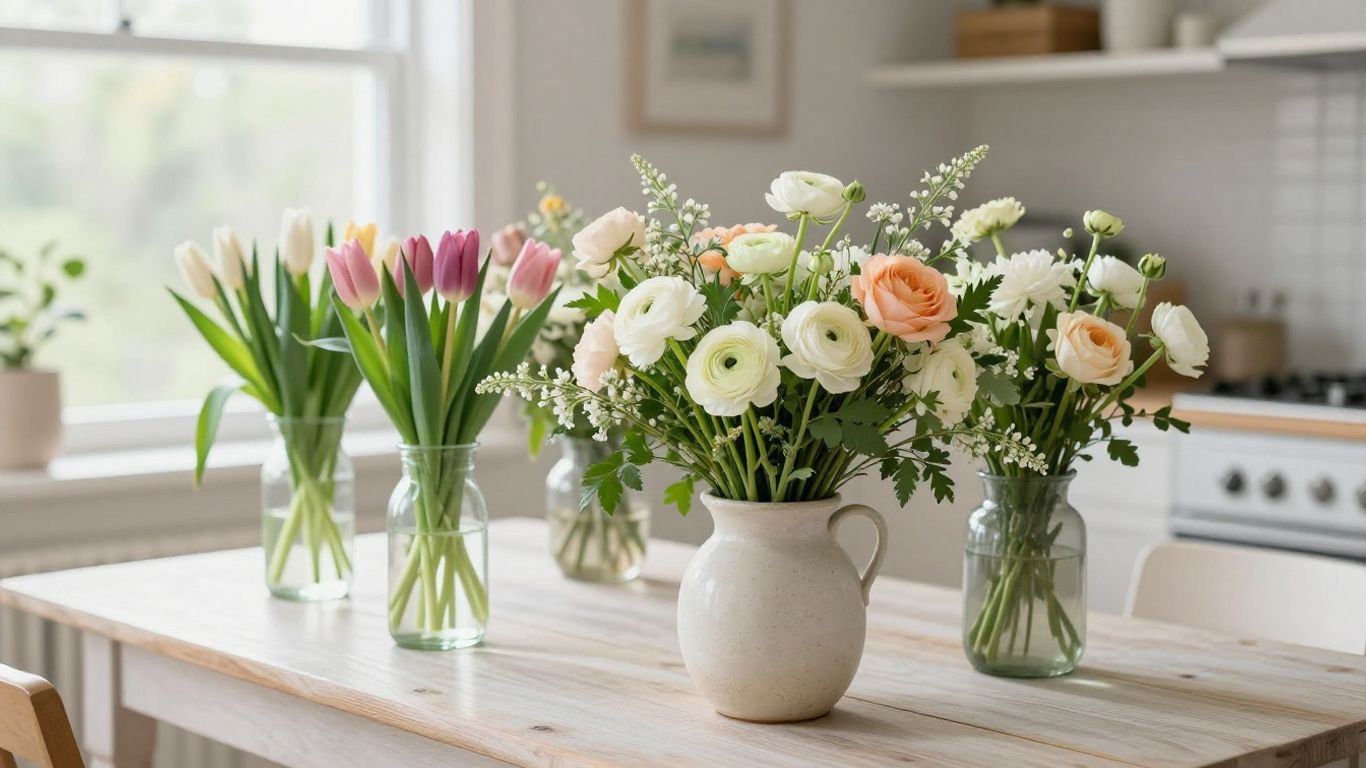
Spring arrangements often suit tulips, ranunculus, sweet peas, iris, and delicate flowering branches when available. Their shapes can make a bouquet feel airy and newly gathered, especially when combined with soft pinks, whites, lilacs, or gentle yellows. A compact posy works beautifully for a bedside table, while a looser hand-tied bouquet gives a larger room more movement.
Because spring stems can be delicate, ask how recently they arrived and whether they are likely to open further. Buds are not necessarily a drawback; they can provide several days of changing texture as the arrangement develops.
Popular summer blooms for bright displays
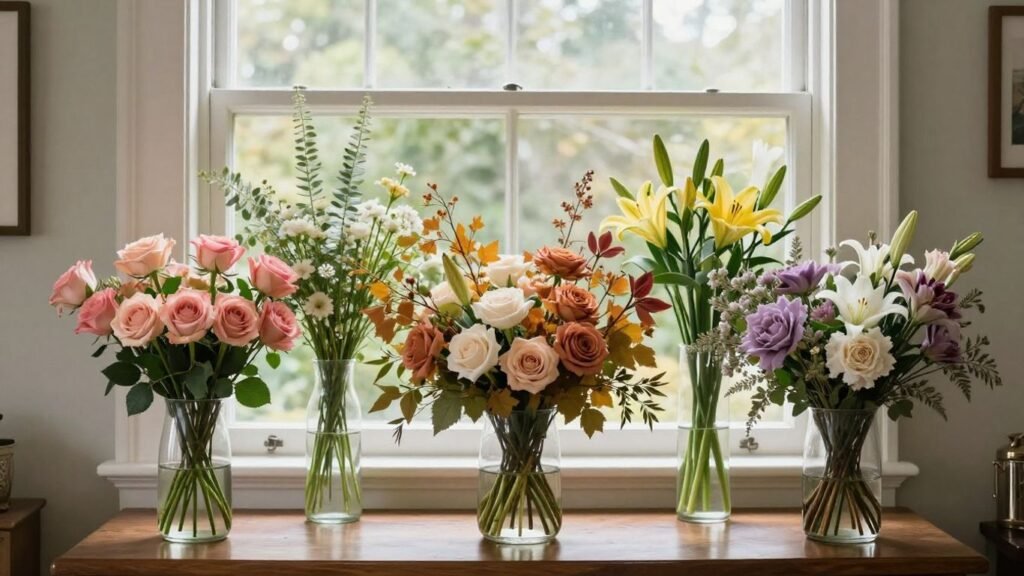
Summer is a natural time for saturated color and generous form. Sunflowers, lilies, roses, dahlias, and other warm-season varieties can create a cheerful display, while leafy foliage keeps vivid flowers from feeling too busy. A mixed bouquet in coral, orange, yellow, and pink feels celebratory without needing a formal reason.
For a smaller gift, choose one strong color family rather than trying to include every bright shade. The result often feels more considered and is easier to place in an existing room.
Autumn flowers with warm, rich tones
Autumn arrangements benefit from rust, burgundy, plum, caramel, cream, and dusty pink. Chrysanthemums, roses, dahlias, and textured foliage can bring fullness without looking heavy, particularly when balanced with a few lighter stems. Native foliage and dried accents may also add shape, but they should support the flowers rather than overwhelm them.
This palette works well for birthdays, dinner hosts, thank-you gifts, and seasonal table arrangements. If the recipient prefers understated flowers, ask for warm neutrals instead of strong red or orange.
Winter flowers for elegant indoor arrangements
Winter bouquets often look best when they have clear structure and a calm palette. White flowers, pale pink roses, lilies, chrysanthemums, seasonal foliage, and branches can create an elegant indoor arrangement, while deeper burgundy or blue accents add contrast. A vase with a strong silhouette can make a smaller bouquet feel intentional.
Winter also rewards attention to placement. Keep the arrangement away from heaters and cold drafts, and choose flowers that can handle the indoor conditions of the destination rather than relying only on appearance at the time of ordering.
Choosing flowers for different occasions
The occasion gives a bouquet its emotional direction, but it should not dictate every detail. The recipient’s taste, the room where the flowers will arrive, and the practicalities of delivery matter just as much. A thoughtful arrangement can be vivid or restrained, familiar or unusual, as long as its scale and mood feel appropriate.
Birthday and anniversary arrangements
Birthday flowers can be bright, playful, fragrant, or quietly elegant depending on the person. Consider their favorite colors and whether they enjoy a loose garden style or a more polished arrangement. Anniversaries often suit a deliberate palette, with roses, lilies, seasonal flowers, or textured foliage chosen to reflect the couple rather than follow a single formula.
If you are unsure, a florist can build around a color preference and a budget. Include a short message so the flowers feel personal rather than anonymous.
Wedding and engagement flowers
Wedding and engagement flowers require more coordination than a one-off bouquet. The season affects the available palette, while the venue, dress, ceremony style, and photography all influence flower shape and scale. Couples who want to plan in detail may find this wedding flower planning resource useful when considering bouquets, centerpieces, and venue arrangements.
Share the event date early, especially if you have a particular flower in mind. A flexible brief built around color, texture, and overall mood usually gives a florist more room to create something cohesive when exact stems are unavailable.
Sympathy and condolence bouquets
Sympathy flowers are usually best when they feel calm, sincere, and carefully proportioned. Whites, soft greens, pale pinks, and gentle blues can communicate tenderness, while a modest arrangement may be more suitable than an elaborate display. Consider whether the flowers are going to a home, funeral service, workplace, or family gathering.
A clear delivery name and address are especially important for condolence orders. If you do not know the family’s preferences, a simple seasonal arrangement with a respectful card is often the safest choice.
Corporate events and everyday gifting
Corporate flowers need to work within a room, schedule, and brand-neutral setting without becoming distracting. Low arrangements suit tables where guests need to see across them, while taller designs may work near an entrance or reception desk. For everyday gifting, a compact posy or vase arrangement can be more practical than a large bouquet.
The main question is how the flowers will be used after delivery. A desk, dining table, hotel lobby, and event stage each call for a different height, vase, and level of maintenance.
How to select a reliable Altona florist
A reliable florist makes the process clear before you pay. You should be able to understand what can be delivered, when an order must be placed, and how substitutions are handled. Clear communication is often a better sign than an overly polished photograph because flowers naturally change with the season.
Comparing local flower shops and online services
Local shops may offer more direct advice about current stock, while online ordering can make it easier to compare styles and arrange delivery from home. Neither format is automatically better. Look for a service that describes its bouquet style honestly and gives enough information to judge whether the arrangement suits the recipient.
When comparing options, consider these practical questions:
- Does the service explain its delivery area and available dates?
- Can you state a preferred color palette or flower style?
- Is the bouquet shown as a representative design rather than an exact guarantee?
- Does the ordering process explain substitutions clearly?
The answers help you separate a convenient ordering experience from one that may leave important details unclear.
Checking freshness, sourcing, and delivery options
Ask whether flowers are selected according to current availability and how the arrangement is prepared for its journey. You can also ask about local sourcing or simpler packaging if those choices matter to you. Delivery information should include the general service area, possible time windows, and any restrictions for apartments, offices, or hospitals.
A florist does not need to promise a particular stem to provide a good result. What matters is whether the service can preserve the intended color, mood, and overall shape when conditions change.
Understanding same-day flower delivery conditions
Same-day delivery is usually dependent on order time, local stock, delivery distance, and the destination’s access requirements. Before placing an urgent order, check the cutoff and confirm that the address falls within the service area. This same-day delivery information is a useful reference for understanding why timing and availability should be checked together.
Leave a little flexibility in the design when ordering late. A florist may be able to create a fresher and more attractive bouquet by using comparable flowers that are already on hand.
Reading reviews and evaluating arrangement quality
Reviews can reveal whether bouquets arrived on time, whether the delivered design felt close to the description, and how problems were handled. Read several recent comments rather than relying on one glowing sentence. Photos from customers may also show how arrangements look outside carefully controlled website photography.
Pay attention to recurring details: clean presentation, healthy foliage, careful packaging, accurate delivery, and helpful communication. These practical signs are more useful than judging a florist only by the most dramatic arrangement in its gallery.
Ordering seasonal flowers in Altona
Ordering becomes easier when you treat the bouquet as a small brief rather than a single product choice. Start with the occasion, recipient, preferred mood, approximate size, and delivery details. Then allow the florist to work with what is fresh and suitable on the day.
Choosing the right bouquet size and style
A hand-tied bouquet feels generous and natural, while a vase arrangement arrives ready to display. Compact posies suit desks, bedside tables, and smaller gestures; larger designs are better for prominent rooms or significant celebrations. Think about the recipient’s space before choosing the biggest option.
Color can be more important than flower variety. A restrained palette often looks sophisticated, while mixed seasonal colors create energy and informality.
Providing accurate delivery details
Include the recipient’s full name, address, phone number, and any useful access instructions. For workplaces, add the business name, department, and preferred reception point. For apartments or gated buildings, a note about entry can prevent a delivery from being delayed.
Double-check the date and spelling before submitting the order. A beautiful bouquet cannot make up for an incorrect address or a recipient who is away when it arrives.
Scheduling orders for special occasions
For birthdays, anniversaries, weddings, and major holidays, ordering ahead gives you more choice. It also allows time to discuss a preferred palette or request a particular arrangement style. If the date is flexible, ask which delivery day is likely to offer the best selection.
Urgent orders may still be possible, but they should be placed as early in the day as you can manage. Share the deadline honestly so the florist can recommend a realistic option.
Managing substitutions when flowers are unavailable
Seasonal supply changes are normal, especially when weather affects a crop or a delivery is delayed. A substitution policy lets the florist preserve the arrangement’s overall value and appearance without waiting for one exact stem. You can usually specify whether color, flower type, size, or price matters most.
A useful instruction is to request a comparable substitute that keeps the original mood. That gives the florist direction while leaving enough room to use flowers that are genuinely fresh.
Making seasonal flowers last longer
Good aftercare begins as soon as the bouquet arrives. Even a well-prepared arrangement needs clean water, a suitable container, and a position away from heat. Small daily adjustments can make a noticeable difference to how the flowers open and age.
Preparing flowers when they arrive
Remove packaging carefully and check whether the stems are arranged for a vase or intended to remain hand-tied. Recut the stems before placing them in water, and remove any leaves that would sit below the waterline. If the bouquet includes care instructions, follow them before adding anything else.
Give the flowers time to settle upright. Some stems may look slightly closed when first delivered and open naturally over the next day or two.
Choosing the right vase and water conditions
Use a clean vase large enough to support the stems without crushing them. Fill it with fresh water at a comfortable room temperature and add flower food if it was provided. Too much foliage below the waterline can make the water cloudy more quickly.
Change the water when it becomes cloudy and rinse the vase before refilling. Clean conditions are usually more helpful than homemade additives that can upset the water balance.
Trimming stems and removing wilting blooms
Re-trim stems every few days with a clean, sharp tool, cutting at an angle so the flowers can take up water effectively. Remove fading petals and leaves as they appear. This keeps the arrangement tidy and reduces decaying material in the vase.
Do not wait for every stem to fade before editing the bouquet. A small rearrangement can give the freshest flowers more room and make the display feel renewed.
Displaying flowers away from heat and direct sunlight
Place the vase in a cool area away from heaters, strong afternoon sun, hot kitchen appliances, and persistent drafts. Keep flowers away from ripening fruit, which can release gases that shorten the life of some blooms. A stable indoor position is usually better than moving the vase repeatedly.
Observe the room over a full day before choosing the final spot. The coolest attractive location will generally help seasonal flowers remain presentable for longer.
Conclusion
Choosing seasonal flowers in Altona is less about following a rigid calendar than paying attention to freshness, mood, timing, and care. Start with the occasion, stay open to suitable substitutions, and give the finished arrangement clean water and a comfortable place to rest. Those simple choices can turn a thoughtful delivery into flowers that continue to bring pleasure well beyond the day they arrive.
Frequently Asked Questions
What are seasonal flowers?
Seasonal flowers are blooms that are naturally more available or at their strongest during a particular part of the year. Availability can still vary by grower, weather, and delivery schedules.
Are seasonal flowers fresher than imported flowers?
They may be fresher when they have spent less time in storage or transit, but freshness depends on harvesting, handling, transport, and preparation. Ask what has arrived recently for the most useful answer.
Can I request a flower that is out of season?
You can ask, but the florist may recommend a similar substitute if the flower is unavailable or poor quality. Share the color, shape, or mood you want to preserve.
How far ahead should I order flowers for a special occasion?
Ordering several days ahead usually gives you more choice, especially for weddings, holidays, and large events. Same-day orders may be possible when stock and delivery capacity allow.
What bouquet style is best for a small home?
A compact posy or medium hand-tied bouquet is often practical for a small room. A vase arrangement can also work well when you want flowers ready to display immediately.
How often should I change flower water?
Check the water daily and replace it when it becomes cloudy or depleted. Rinse the vase, remove submerged foliage, and recut the stems as needed.
Where should I display a flower arrangement?
Choose a cool position away from direct sunlight, heaters, strong drafts, hot appliances, and ripening fruit. Stable conditions generally help flowers last longer.