Key Takeaways
Good floral styling starts with the setting, the season, and the feeling you want people to take away. Thoughtful planning usually matters more than using the most expensive flowers.
- Define the mood before choosing individual flowers.
- Use color, texture, and shape together for depth.
- Let Altona’s seasons guide availability and character.
- Plan ceremony, table, and entrance flowers as one design.
- Confirm logistics, substitutions, care, and pricing in writing.
Understanding floral styling in Altona
Floral styling is the process of shaping flowers into a visual experience, whether that experience is for a home, a business, or a special event. It considers scale, color, scent, containers, placement, and how people move through a space. For anyone searching for floral styling Altona, the best starting point is not a bouquet catalogue but a clear idea of the atmosphere to create.
What floral styling includes beyond flower delivery
Delivery gets flowers from one place to another; styling decides how those flowers live in the space. A stylist may help select vessels, vary arrangement heights, coordinate several displays, and position flowers so they work with furniture, lighting, or a ceremony layout. The result feels considered rather than like a collection of unrelated bouquets.
A useful brief covers the number of arrangements, approximate dimensions, preferred colors, venue access, and the length of time the flowers need to look fresh. It should also mention allergies, strong fragrance concerns, and whether guests need clear sightlines across tables.
How Altona’s setting can influence your design
Altona’s coastal character can encourage a relaxed approach, with airy shapes, natural foliage, and colors drawn from sand, water, and warm afternoon light. That does not mean every arrangement needs to look rustic. A clean, architectural design can feel just as appropriate when its proportions suit the room.
Consider wind, sunlight, indoor heating, and the distance between the preparation space and the final display. Flowers placed near a bright window or an open entrance may need sturdier stems and more careful hydration than flowers arranged in a cool interior.
Choosing between fresh, dried, and seasonal flowers
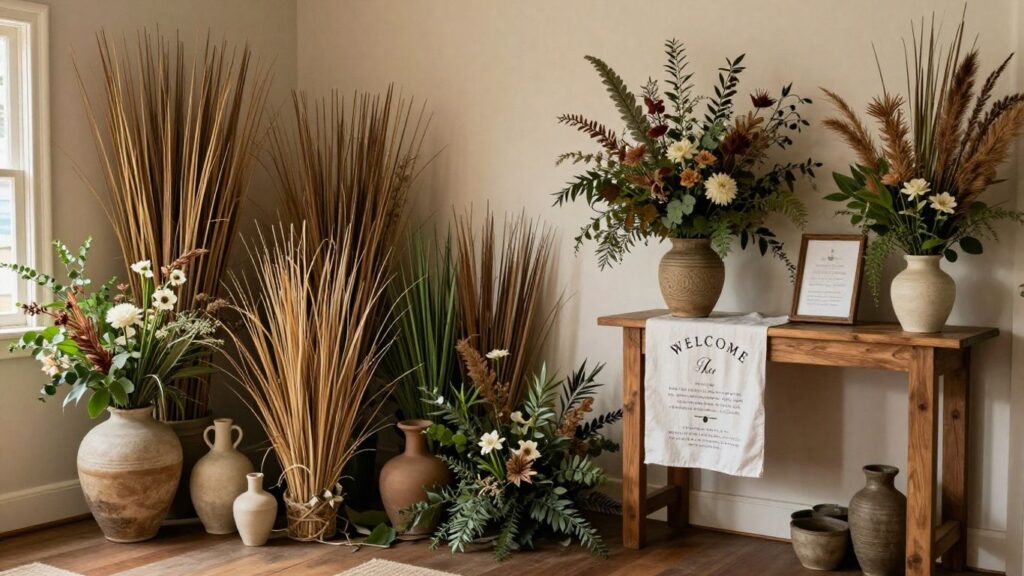
Fresh flowers offer movement, fragrance, and a changing quality as they open. Dried flowers are useful when longevity matters or when a softer, textural arrangement suits the interior. Seasonal flowers tend to bring a stronger sense of place, although the exact selection can vary with weather and supplier availability.
A mixed design can combine fresh focal blooms with dried grasses or long-lasting foliage. Keep the balance intentional: dried elements should support the design, not make a fresh arrangement feel dusty or dated.
When to hire a professional floral stylist
Professional help is especially useful when several spaces need to feel connected or when setup must happen within a narrow venue window. A stylist can translate a mood board into quantities, stem choices, vessels, and installation details. This is also helpful for couples or hosts who want to enjoy the event instead of managing buckets and ribbons on the day.
For a simple home arrangement, a good flower shop may be enough. For a wedding, launch, or large dinner, ask for a written proposal that explains the design direction and what is included in setup and collection.
Planning your floral style and color palette
A strong floral plan begins with the room or event rather than with a single favorite bloom. Look at the existing colors, materials, architecture, and available light. Then decide whether the flowers should blend quietly into the setting or provide a deliberate contrast.
Matching flowers to your event or interior
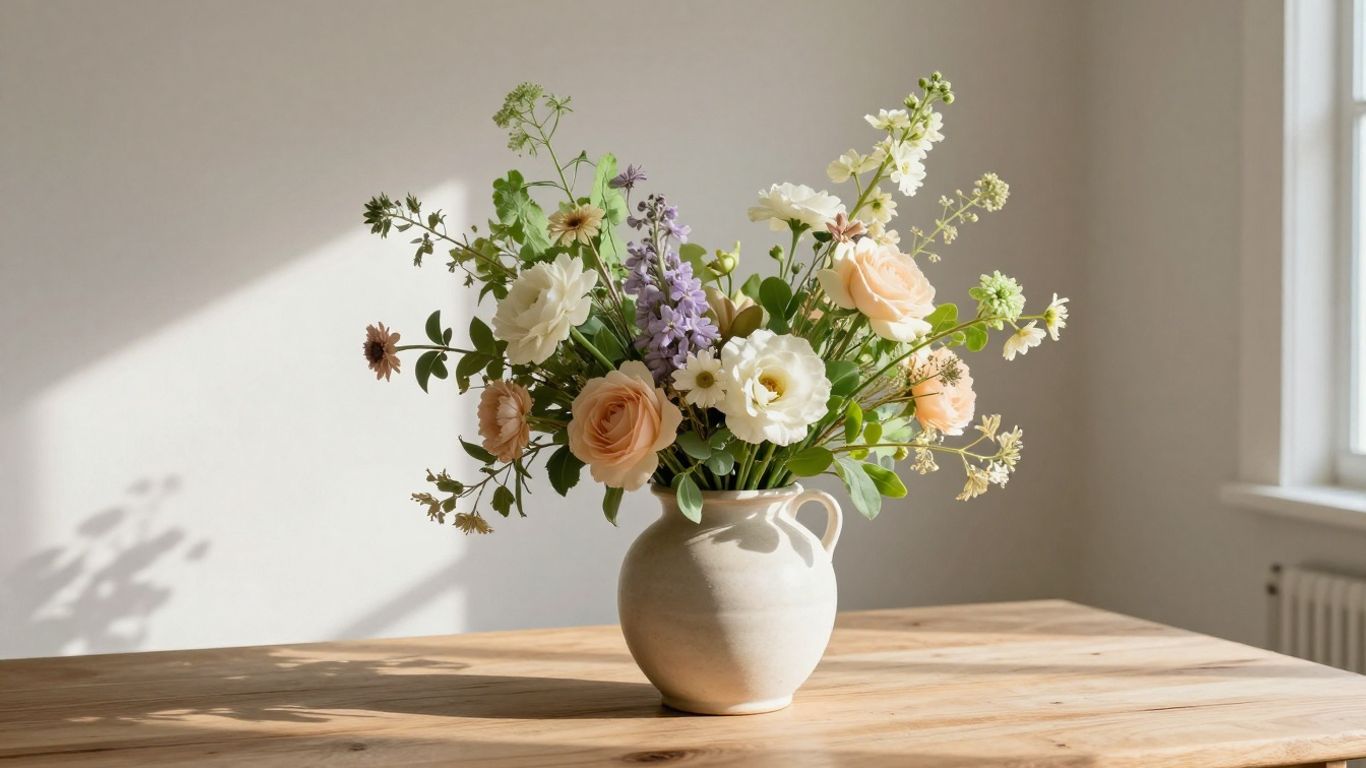
A low, loose arrangement may suit a family dining table, while a tall design can give an entrance more presence. For a wedding, the venue’s ceiling height and furniture style should influence the floral scale. At home, repeat one or two tones from cushions, artwork, or ceramics so the arrangement feels connected to the room.
When preparing a property for sale, flowers should support a clean first impression rather than compete with the architecture. They can sit alongside broader home staging ideas, particularly in entryways and living spaces where restrained styling helps a viewer imagine the room in use.
Building a cohesive color scheme
Start with two or three main colors, then add a small number of supporting tones. A monochromatic scheme can feel elegant and calm, while complementary colors create energy. Greenery is not just a filler color; its blue, silver, yellow, or deep green undertones can change how the flowers read.
The palette should also respond to the event’s lighting. Warm bulbs intensify reds and apricots, while daylight can make pale flowers appear cooler. Ordering a small sample arrangement or reviewing stem photographs in similar light can prevent surprises.
Balancing focal flowers, fillers, and greenery
Focal flowers draw the eye, secondary flowers create rhythm, and greenery gives the arrangement structure. The balance depends on the style: a meadow-like design may use many small blooms, while a modern arrangement may rely on a few strong shapes and generous negative space.
Use this simple structure when discussing quantities with a stylist:
- One or two focal flower types for visual emphasis.
- Supporting blooms that repeat the palette without flattening it.
- Greenery or branches that establish movement and height.
- A small textural element, such as berries, grasses, or seed heads.
This framework leaves room for substitutions while protecting the overall look. It also makes it easier to compare proposals that use different flower varieties.
Using texture and shape to add visual interest
Texture comes from the contrast between smooth petals, ruffled blooms, glossy leaves, fine grasses, and woody stems. Shape matters too: rounded flowers soften a design, spikes add direction, and trailing foliage draws the eye down or outward. A good arrangement gives the viewer several details to discover.
Do not make every part equally busy. One clear focal point and a few quieter passages usually look more natural than an arrangement packed from edge to edge. For online portfolios, AltText.ai is one example of a tool described for generating image alt text, which can help businesses make floral project images more accessible; it is separate from the floral design itself.
Selecting flowers for Altona’s seasons
Seasonality gives floral styling a natural rhythm and can make an arrangement feel timely without relying on themed decorations. Availability changes with growing conditions, imports, and local supply, so a flexible brief is wiser than insisting on one exact stem. Ask for the intended color, shape, and mood if a preferred variety is unavailable.
Spring flowers for light and fresh arrangements
Spring designs often benefit from pale foliage, slender stems, and flowers with an open, upward movement. Soft pinks, whites, lilacs, and fresh greens can create a gentle arrangement, while bulbs and delicate branches add a sense of new growth.
Keep spring displays from becoming too sweet by introducing a darker leaf, a rough ceramic vessel, or a single sculptural branch. The contrast gives light colors enough definition to hold their place in a room.
Summer blooms that create a vibrant look
Summer is a natural time for saturated color, generous shapes, and arrangements that feel abundant. Warm yellows, coral, vivid pinks, and clear blues can work well for outdoor celebrations, provided the flowers are protected from direct heat and drying wind.
For a seasonal starting point, browse examples of fresh Altona flowers and then discuss how the palette could be adapted to your own venue or interior. A professional should be able to explain what is currently available rather than promise a stem that may not be in season.
Autumn flowers for warmth and depth
Autumn styling can draw on rust, burgundy, plum, ochre, cream, and muted green. Flowers with sturdy heads, branches, berries, and seed pods give arrangements a grounded quality. This palette works particularly well with timber, linen, stone, and warm metal finishes.
Layering is the key. Combine one deep tone with lighter neutrals so the design feels rich but not heavy, and use varied heights to keep darker flowers from forming a solid block.
Winter options for elegant seasonal styling
Winter arrangements do not need to feel sparse. White and green flowers, branches, dried materials, berries, and glossy foliage can create a restrained design with plenty of texture. Silvered leaves and pale neutral vessels add polish without forcing a holiday theme.
A short visual lesson can be useful when planning structure and proportion:
After watching, sketch the arrangement’s widest point and tallest point before ordering flowers. That small exercise often reveals whether the design suits the table, mantel, or entrance where it will be placed.
Designing flowers for weddings and special events
Event flowers need to look beautiful in person and in photographs, while also surviving transport, setup, guests, weather, and time. The design should therefore be planned as a system rather than as separate purchases. Begin with the venue and guest experience, then decide where flowers will have the greatest visual and emotional effect.
Creating a floral concept for the venue
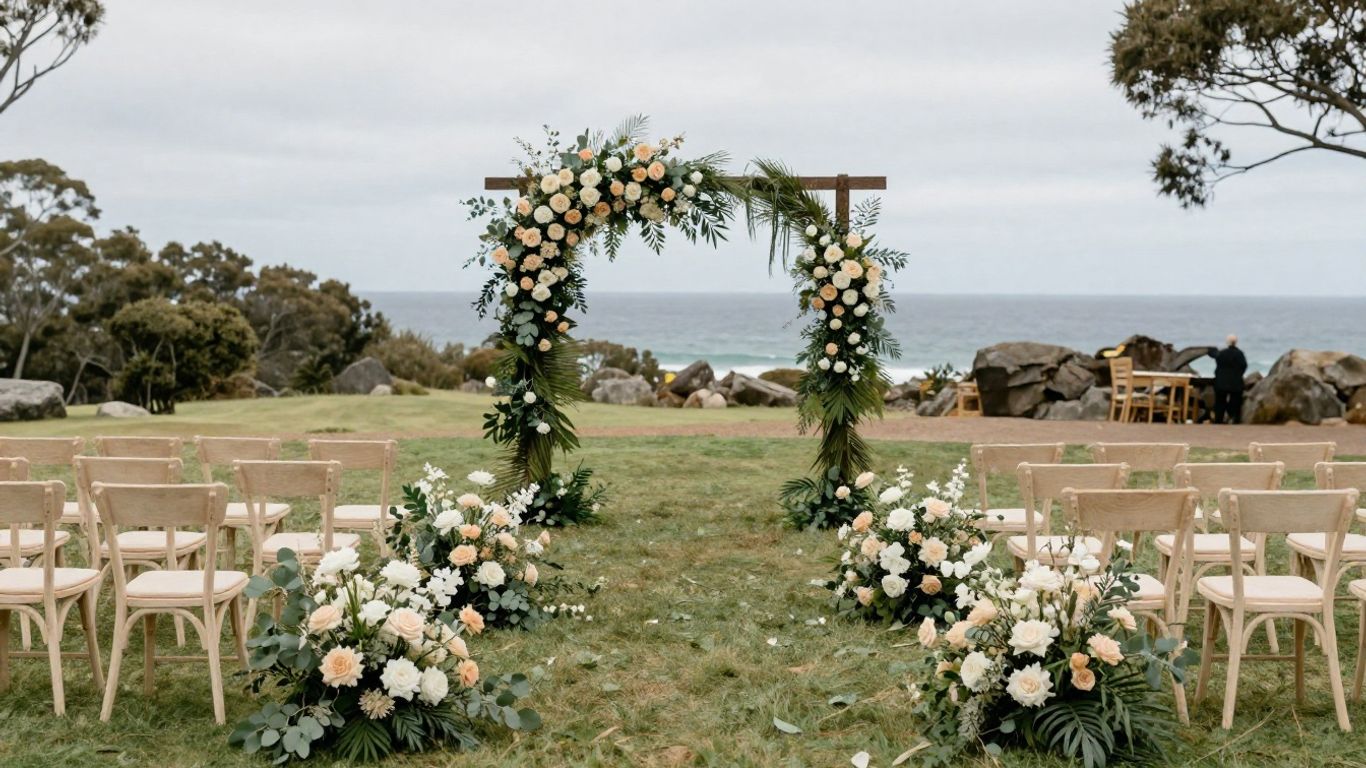
Walk through the venue and note the strongest architectural features, the ceremony sightline, the dining layout, and the places guests naturally pause. A floral concept might be airy and coastal, richly garden-like, sculptural and modern, or understated with native textures.
Bring photographs, fabric swatches, invitation colors, and examples of arrangements you like. The purpose is not to copy an image but to identify useful qualities such as looseness, height, density, or color contrast.
Styling ceremony spaces, tables, and entrances
Ceremony flowers frame the people and the moment, while table flowers need to leave enough room for conversation, plates, and shared dishes. Entrance arrangements can establish the mood before guests see the main room. Reusing a ceremony installation at the reception can make the budget work harder, if transport and timing allow.
For larger events, logistics may involve more than flowers. A venue plan can also require coordination with commercial sign guidance when floral installations sit near branded entrances, directional displays, or other temporary fixtures. Treat these as separate specialist considerations rather than assuming one supplier covers both.
Coordinating bouquets, buttonholes, and wearable flowers
Personal flowers should echo the main concept without looking like miniatures of the largest installation. The bouquet can carry the richest mix of textures, while buttonholes and corsages usually benefit from a smaller, clearer shape. Secure fastenings matter, particularly for pieces worn during long ceremonies or warm-weather photographs.
Choose flowers that feel comfortable against clothing and skin. Avoid overly fragile petals for wearable designs, and tell the stylist about delicate fabrics so stems and pins can be finished appropriately.
Managing the floral budget without losing impact
A budget is easier to manage when it is divided by priority rather than by flower type. Decide which moments must photograph well, which arrangements can be moved, and where candles, fabric, or foliage can provide atmosphere without adding many blooms.
A practical priority order might look like this:
- Ceremony focal point or main backdrop.
- Personal flowers that will appear throughout the day.
- Guest tables and the top table.
- Entrance, welcome, and bar arrangements.
This order is not universal, but it creates a useful conversation when the first proposal is too high. It is better to reduce volume in a low-priority area than to weaken every arrangement slightly.
Styling flowers for homes and businesses
Flowers change how a room is entered, used, and remembered. At home, the arrangement should fit the rhythm of daily life; in a business, it should be welcoming without obstructing work or customer movement. Container choice and maintenance are just as important as the stems.
Choosing arrangements for living rooms and entryways
An entryway usually benefits from a defined silhouette that can be seen from a distance. A living room allows more experimentation, such as a low arrangement on a coffee table or a branch-led design on a sideboard. Keep arrangements away from narrow walkways and unstable surfaces.
Scale matters more than price. One well-proportioned arrangement can feel calmer and more luxurious than several small vases scattered without a relationship to one another.
Creating welcoming displays for offices and shops
Reception desks and retail counters need arrangements that look good from several angles. Use durable flowers, moderate fragrance, and a vessel that will not spill when the surface is bumped. Repeating a small palette across several locations can give a business a polished visual identity.
Leave room for practical tasks such as signing in, handling purchases, or placing parcels. The best display welcomes people without making them work around it.
Selecting flowers for restaurants and hospitality spaces
Restaurant flowers should support the food and interior rather than overpower either. Low table arrangements protect conversation, while a taller display may work better in a lobby or private dining room. Fragrance deserves special attention, since strongly scented blooms can interfere with the meal.
The flowers can also relate to the drinks program and seasonal menu. For inspiration on how a hospitality setting organizes its offering, the Kaboom Beverage Menu provides a useful example of a broad drinks presentation, although menu planning and floral styling remain separate tasks.
Maintaining arrangements in high-traffic areas
High-traffic displays need a simple care routine and a stable location. Check the water level regularly, remove fading stems, and keep foliage below the waterline. In warm or sunny areas, moving the vase slightly can extend its life more effectively than replacing flowers early.
Ask for written care instructions when the arrangement is delivered. A clear handover should explain watering, trimming, safe placement, and what to do if a stem bends or a container leaks.
Finding the right floral styling service in Altona
Choosing a stylist is partly a matter of taste and partly a matter of reliability. A portfolio can show design ability, but it will not always reveal how the team handles substitutions, access restrictions, weather, or a tight setup schedule. Treat the first conversation as a chance to test both creative fit and practical communication.
Reviewing portfolios and design specialties
Look for work photographed in settings similar to yours, not only carefully controlled studio bouquets. Notice whether the portfolio includes weddings, homes, hospitality spaces, installations, or the type of event you are planning. Consistency of finish matters, but so does the stylist’s ability to work in more than one visual language.
Ask which parts of the work were designed, delivered, installed, and maintained by the stylist. A portfolio should help you understand the service, not simply provide attractive inspiration.
Comparing consultations, packages, and pricing
Quotes are easier to compare when they separate flowers, vessels, labor, delivery, setup, collection, tax, and possible hire fees. Ask whether the consultation is included, whether revisions are charged, and how the final stem count is decided. The cheapest initial number may not be the lowest total once setup and transport are added.
For an unrelated planning reference, Golf DFS strategy illustrates how a defined budget can be allocated among competing priorities. The same broad habit applies here: decide what matters most before comparing line items, rather than trying to make every element equally elaborate.
Confirming delivery, setup, and venue logistics
Confirm the delivery window, unloading point, parking access, stairs, lifts, refrigeration, setup duration, and collection arrangements. A venue may have rules about candles, adhesives, water on floors, or installations attached to walls. Put the agreed plan in writing so everyone knows who is responsible for each step.
If the event is outdoors, discuss a weather alternative early. Wind, heat, and rain can affect both the flower selection and the amount of equipment needed to secure the design.
Asking about substitutions, sustainability, and care instructions
No seasonal flower plan is completely fixed, so ask how substitutions are handled. The stylist should be able to preserve the agreed palette, shape, and overall mood even when a particular variety is unavailable. It is also reasonable to ask about local sourcing, foam use, reusable mechanics, composting, and vessel hire.
Before approving the quote, make sure care instructions and end-of-event responsibilities are clear. For a local delivery comparison, Altona flower delivery can be a useful reference point when considering the difference between a delivered arrangement and a fully styled service.
Conclusion
Beautiful floral styling in Altona comes from matching flowers to a real place, a real season, and a clear purpose. With a considered palette, balanced textures, realistic logistics, and a service brief that covers care and substitutions, even a modest arrangement can feel distinctive and complete.
Frequently Asked Questions
What is floral styling?
Floral styling combines flower selection with color planning, arrangement design, vessels, placement, installation, and care. It can be used for homes, businesses, weddings, and other events.
How far in advance should I book a floral stylist?
For weddings and larger events, booking several months ahead gives more room for concept development, seasonal planning, and venue coordination. Smaller arrangements may need less notice, depending on the date and flower availability.
Are seasonal flowers a better choice?
Seasonal flowers are often a practical choice because they suit the time of year and may be more readily available. A flexible brief usually produces a better result than insisting on one exact variety.
How do I choose a floral color palette?
Begin with the room, venue, clothing, invitations, or brand surroundings that already exist. Select two or three main colors, then add supporting foliage and one contrasting tone if the design needs more energy.
What flowers work best for restaurant tables?
Low arrangements with restrained fragrance are generally suitable because they protect conversation and do not interfere with food. The final choice should also suit the table size, lighting, and ventilation.
Can ceremony flowers be reused at the reception?
Often they can, provided the design is portable and the venue schedule allows time for moving it. Confirm who will transport and reset the flowers before relying on reuse to reduce costs.
What should I ask before accepting a quote?
Ask what flowers, vessels, delivery, setup, collection, labor, tax, substitutions, and care instructions are included. Also confirm access requirements, weather plans, and payment or cancellation terms.