Key Takeaways
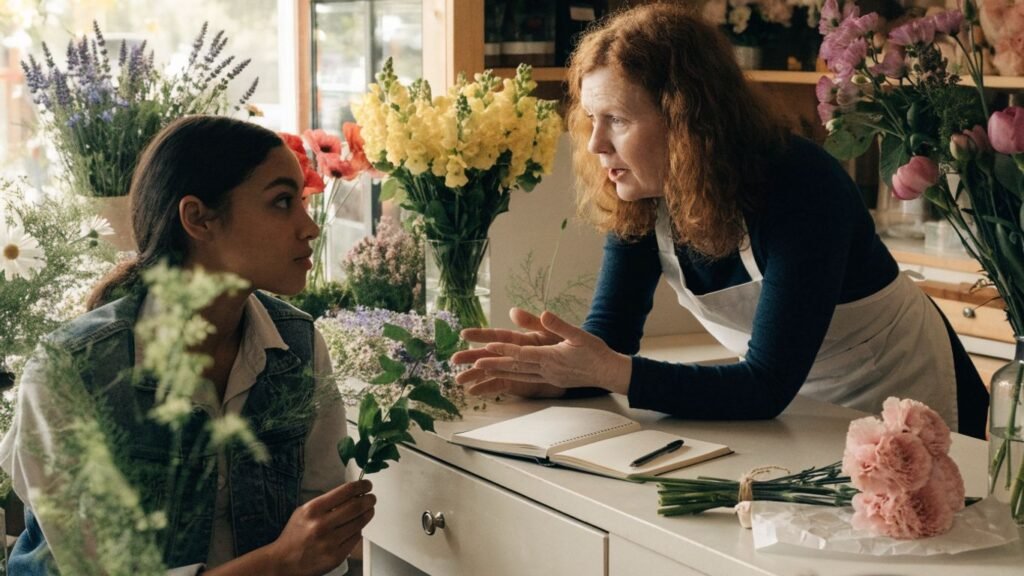
A floral advice chat can make choosing flowers feel clearer, especially when you have a few practical details ready. Use the conversation to shape an arrangement that fits the occasion, your budget, and delivery plans.
- Start with the occasion, recipient, budget, and the message you want to send.
- Share preferences and sensitivities, but stay open to suitable alternatives.
- Ask about seasonal flowers, substitutions, size, and presentation.
- Confirm delivery details, timing, fees, and access instructions.
- Review the final recommendation and terms before placing your order.
What to expect from a floral advice chat
A floral advice chat is a chance to turn a broad idea into a more considered choice. You might know the occasion but not the style, or have a favorite color without knowing which flowers suit it. A floral advice chat Hobsons Bay can also help you raise practical questions before you commit to an arrangement.
How a florist can help you narrow down your options
A florist can ask about the recipient, the occasion, your budget, and the feeling you hope the flowers will convey. Those details help narrow the field without making the decision feel overly formal. If you are choosing a gift, you can also mention the recipient’s tastes, any flowers they dislike, and whether fragrance matters.
A good conversation does not need to begin with a precise flower list. It can start with something as simple as “bright and cheerful” or “quiet and thoughtful,” then move toward colors, shapes, and arrangement styles that fit. You might also look at fresh flower delivery options as one way to get a sense of the choices available locally.
When a quick chat is enough and when you need a consultation
For a straightforward bouquet, a brief exchange may be enough to confirm the style, budget, and delivery details. More involved occasions often benefit from a longer discussion, particularly when the arrangement needs to fit a specific setting, include a particular flower, or carry a sensitive message. Give yourself time if several people are coordinating the order or if the flowers need to arrive for a set event.
Some choices have personal considerations beyond appearance. For example, if accessibility at the delivery address is relevant, it may help to check practical details in advance; accessible home planning offers broader ideas for thinking about a safer, easier-to-navigate space. Keep the florist conversation focused on the arrangement and delivery needs that matter to you.
What to ask before placing an order
Before ordering, ask questions that help you understand what is being recommended and what will happen next. It can be useful to keep a short set of prompts nearby, especially if you are comparing a few styles or arranging delivery from a distance.
- Which flowers and colors do you recommend for this occasion?
- What size or presentation fits the budget I have in mind?
- Are any of the flowers seasonal or subject to substitution?
- What delivery details or fees should I confirm?
The answers should leave you with a clear picture of the arrangement and the order terms. If something remains uncertain, ask before placing the order rather than assuming it will be handled a particular way.
Prepare for a more useful conversation
A little preparation can make a floral chat more relaxed and productive. You do not need to arrive with every detail decided, but knowing what matters most will help the florist offer relevant options. It is also worth separating firm requirements from preferences you are happy to adapt.
Set a budget and decide what it should include
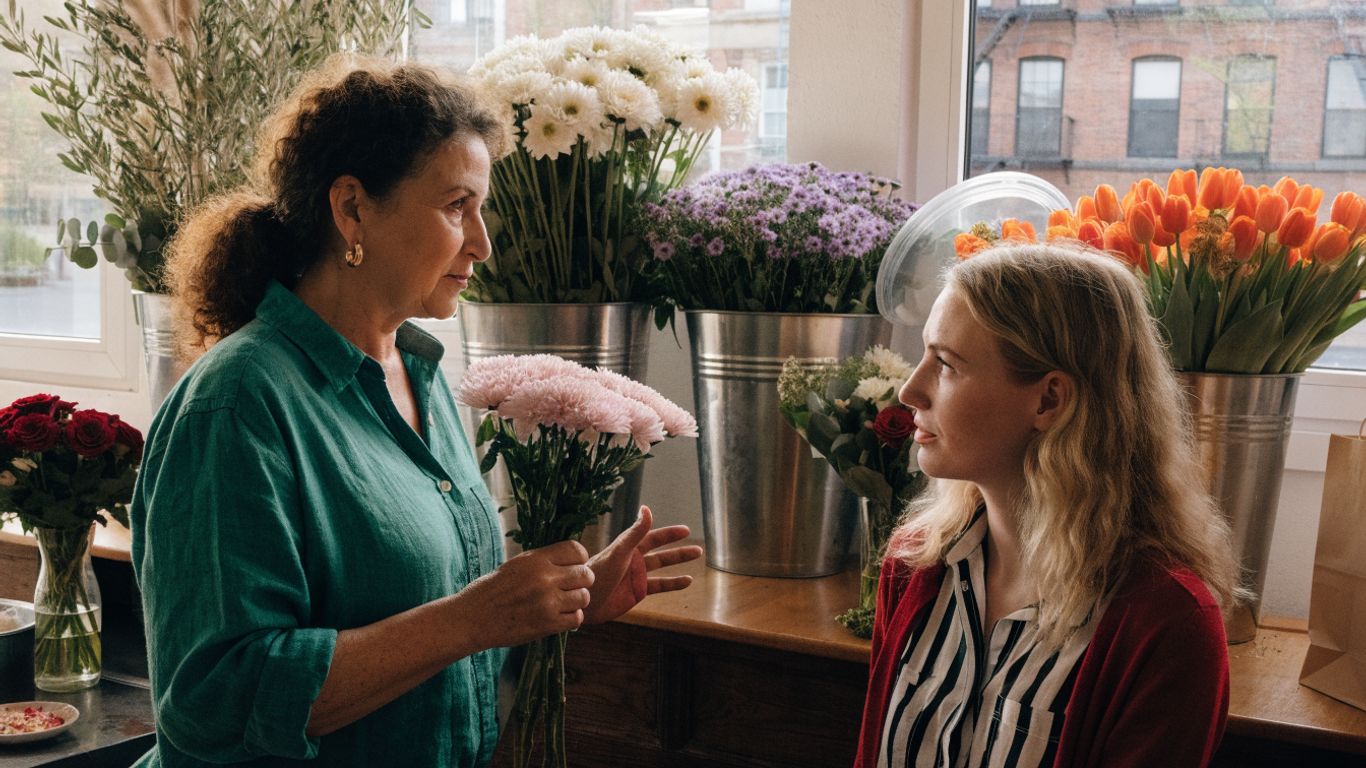
Share a comfortable budget early in the conversation, then clarify what you expect it to cover. You may want to ask whether the figure includes the arrangement, wrapping or a vase, a message card, and delivery. A clear total budget gives the florist room to suggest realistic options rather than focusing on a style that may not fit.
It can help to compare how different choices affect the overall order. The table below is a simple way to frame the conversation; exact pricing and inclusions depend on the florist and the arrangement.
| Choice to discuss | What to clarify | Why it helps |
|---|---|---|
| Arrangement style | Bouquet, vase, or another presentation | Sets expectations for the finished gift |
| Size | The scale you have in mind | Makes comparisons more meaningful |
| Extras | Card, wrapping, or vase | Prevents surprises in the total |
| Delivery | Address, timing, and any fee | Helps you consider the full cost |
Once the inclusions are clear, the florist can suggest where to spend and where a simpler option may work just as well. If delivery is part of your budget, mention it before settling on a design.
Share the occasion, recipient, and preferred style
Explain what the flowers are for and who will receive them. A birthday, a thank-you, a welcome, and a gesture of sympathy may call for very different tones, even when the recipient’s favorite colors are the same. If you are ordering for a home in Altona Meadows, you can also browse flowers for Altona Meadows for ideas about styles and occasions.
Describe the recipient in practical, personal terms: whether they prefer modern or classic arrangements, enjoy fragrance, or have a favorite color. You do not need to know the names of specific blooms. A few useful details give the florist a better starting point and help the recommendation feel personal.
Bring reference photos while staying open to alternatives
A reference photo can make it easier to explain shape, color, or overall mood. Treat it as a guide rather than a promise that every flower will match exactly; the season and availability can affect what is possible. Point out what you like in the image, whether that is its loose shape, a particular palette, or the way the flowers are presented.
Photos can also help you explain what you do not want. If you have a particular scent in mind, you might describe it in everyday language or explore fragrance families to find words for the kinds of aromas you enjoy. The most useful reference is one that clarifies your preferences while leaving room for a thoughtful alternative.
Choose flowers that suit the occasion
The best arrangement is not always the most elaborate one. Consider what you want the recipient to feel when the flowers arrive, and how the arrangement will sit in the place where it is received. Sharing the intention behind your choice gives the florist context that a color preference alone cannot provide.
Match the arrangement’s style to the message
A soft, restrained design may feel right for a quiet gesture, while a vivid bouquet can bring energy to a celebration. Shape and presentation matter too: a hand-tied bouquet, for example, gives a different impression from flowers already arranged in a vase. Describe the message you want to send, then ask which style seems to fit.
Try not to rely on a single word such as “elegant” or “cheerful” if you can explain what it means to you. One person may picture simple and airy; another may mean rich colors and a generous shape. A little clarification helps the recommendation reflect your intention rather than a guess.
Consider color, fragrance, and flower preferences
Color can set the tone, but it is only one part of the choice. Ask whether the recipient enjoys fragrant flowers, prefers a particular bloom, or tends to avoid certain colors. If the flowers will be placed in a shared space, a gentler scent may be a more comfortable choice than a strong one.
If scent is part of the idea, describe it as carefully as you describe color. Some people enjoy fresh, green aromas; others prefer something soft or barely noticeable. You can also ask the florist whether the suggested flowers are likely to have the fragrance level you have in mind.
Communicate cultural considerations and sensitivities
Tell the florist about any cultural or personal considerations that should shape the arrangement. This might include colors or flowers you would rather avoid, a preference for a restrained presentation, or a sensitivity to fragrance. You are not expected to explain more than you wish; a clear, respectful note can be enough.
For a delivery to a household where someone has limited mobility, practical access details may matter as much as the design. Broader home accessibility ideas can prompt useful questions about clear pathways or where a delivery can be left, though the florist will need the specific instructions for your order. Keep those instructions concise and relevant to the recipient’s comfort.
Balance your wishes with availability
Flower choices can change with the season and what is available at the time of ordering. A favorite bloom may not be an option on the day, or the florist may recommend a different flower that better suits the overall look. Keeping your priorities clear makes it easier to adapt without losing the feel you wanted.
Ask which flowers are in season
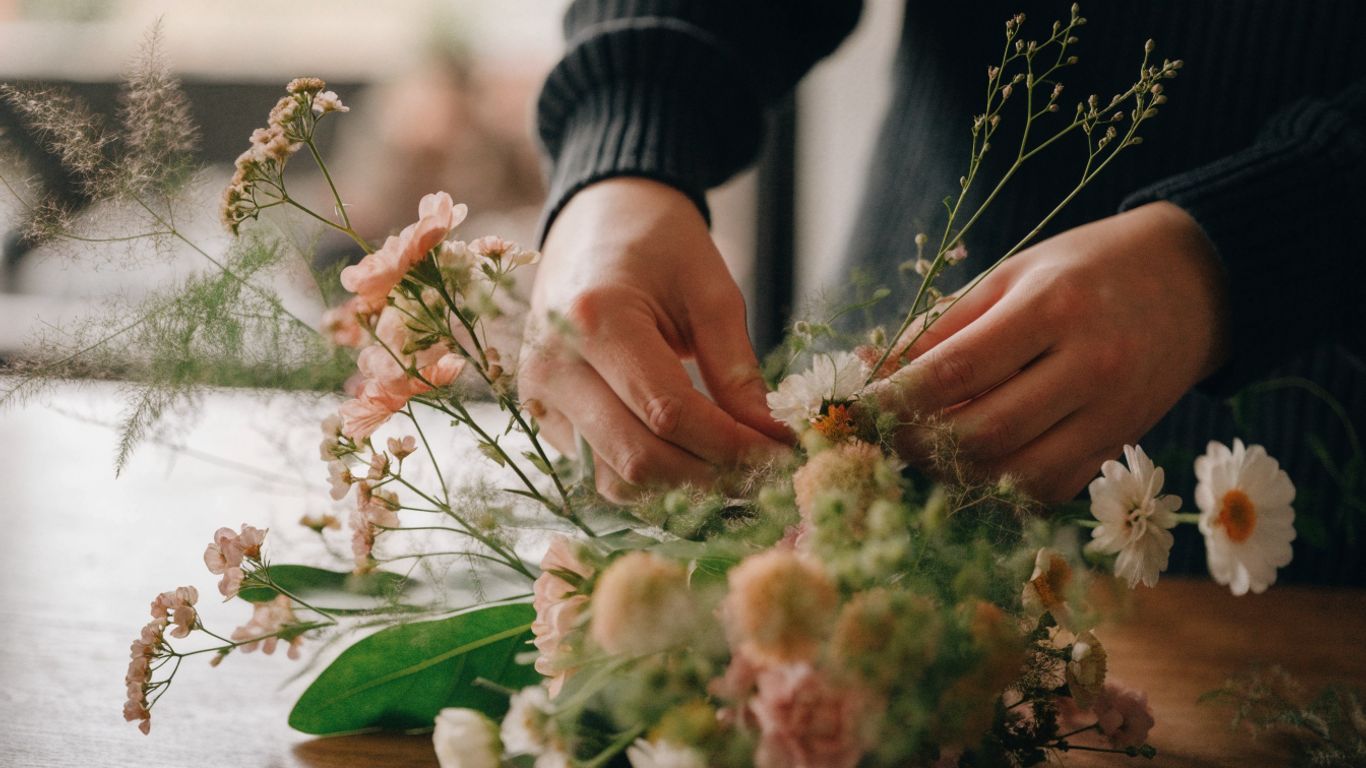
If a specific flower matters to you, ask whether it is currently in season and likely to be available for your date. You can also ask what seasonal options would give a similar color, shape, or mood. That opens up a more useful conversation than assuming every bloom can be sourced at any time.
A seasonal recommendation can be a starting point, not a requirement. Tell the florist what matters most—perhaps a certain color or a soft, rounded shape—and let them explain which flowers can achieve that effect. If you are interested in what local arts and community events are happening around Altona, Louis Joel Arts & Community is one local listing to explore alongside your plans.
Discuss substitutions if a specific bloom is unavailable
If you have a must-have flower, say so early and ask what happens if it cannot be sourced. If it is a preference rather than a firm requirement, explain the quality you want to preserve instead, such as a pastel palette or a loose garden style. That gives the florist a useful basis for suggesting a replacement.
You can also ask whether you will be contacted before a significant change is made. The answer helps you understand how much flexibility the order allows and whether you need to approve a substitution. For a broader sense of local context, Hobsons Bay community news offers an interactive edition of a community publication; it is separate from checking a particular flower’s availability.
Compare bouquet size and arrangement styles within your budget
When comparing options, look beyond a single description such as “small” or “large.” Ask what the size means in the chosen style and whether a vase or other presentation is included. A compact design can feel polished and intentional, while a fuller bouquet may make a stronger visual impression; the right choice depends on your budget and the setting.
If the first idea is outside your range, ask what can be adjusted without changing the overall mood. A different flower mix, a simpler presentation, or a change in scale may help. Focus on the elements that matter most to you, then make any trade-offs deliberately.
Plan local delivery in Hobsons Bay
Even a well-chosen arrangement needs clear delivery instructions. Confirm the suburb and address carefully, and think about where and when the recipient can accept the flowers. A quick check can prevent confusion, particularly for apartments, workplaces, and addresses with restricted access.
Confirm the delivery suburb and address details
Provide the full delivery address, including the suburb, unit or apartment number, and any relevant entry instructions. If the recipient’s name differs from the name on the door or mailbox, explain that too. For an apartment or workplace, include the details that will help the delivery reach the right person without sharing unnecessary personal information.
Hobsons Bay includes different neighborhoods and address types, so do not assume that a suburb name alone is enough. If you are unsure whether the destination is within a delivery area, ask before ordering. Confirm any gate, reception, or access instructions in the same conversation.
Check delivery dates, timing, and any extra fees
Ask which delivery dates are available and whether a specific arrival time can be requested or guaranteed. If the flowers are for an event, leave enough time for the arrangement to arrive before it begins. Confirm any delivery fee and whether the amount changes with the address or timing.
For local plans, flowers delivered across Hobsons Bay can be a useful place to check delivery coverage. Treat the order details—not a general assumption—as the final guide to availability, timing, and cost. If the date is important, repeat it back before you finish the order.
Ask how the florist handles access issues or recipient absence
Find out what happens if the recipient is not home or the delivery person cannot get through a gate or building entrance. Ask whether an alternative drop-off point can be used and what instructions you need to provide. If the flowers are meant for someone who is preparing a home for spring, practical household planning may also be on their mind; these spring home maintenance tips are a separate resource, not a delivery guide.
Be specific about what the recipient has agreed to and what would feel appropriate. If no safe or suitable place is available, ask how the florist will handle the situation and whether you need to provide another contact method. Clear expectations help you decide whether the delivery plan is workable.
Review the recommendation before ordering
Before you place the order, take a moment to review the recommendation as a whole. Check that the arrangement reflects the occasion, fits your budget, and can be delivered as planned. A final review is especially helpful when you have shared a reference photo or made a request about fragrance, color, or a specific flower.
Confirm the flowers, colors, size, and presentation
Repeat the key design details back to the florist: the flowers or general flower style, preferred colors, size, and whether the arrangement should arrive wrapped or presented in a vase. If substitutions are acceptable, say which aspects should stay consistent. This gives both of you a shared understanding of the plan.
If you are ordering from a reference image, point out which features matter most and which can change. That can be the palette, the shape, or the overall level of fullness. You do not need to specify every stem; the goal is to make your priorities clear.
Check the total price and delivery terms
Ask for the total price, including any delivery charge and extras you have chosen. Confirm the destination, date, and timing request at the same time. If anything is unclear, pause to clarify it before payment rather than relying on an assumption.
A careful check also gives you a chance to confirm the order is addressed to the right person and location. Keep the final details somewhere you can refer to later, such as an order confirmation. That makes it easier to follow up if you need to ask a question.
Clarify what happens if the finished arrangement differs from your reference image
A photo can communicate your taste, but flowers are natural materials and the finished arrangement may not be identical. Ask how the florist handles differences in flower availability, color variation, or shape. It is reasonable to clarify what counts as an acceptable alternative before the design is prepared.
If you have a non-negotiable detail, name it plainly and ask whether it can be confirmed. For everything else, focus on the qualities you hope to preserve rather than expecting an exact copy. That balance leaves room for the florist’s judgment while keeping your expectations clear.
Conclusion
A thoughtful floral choice starts with a clear idea of the occasion and a willingness to discuss the details. Share your budget, preferences, sensitivities, and delivery needs, then review the recommendation before ordering. With those basics settled, it is easier to choose flowers that feel personal and arrive with fewer surprises.
Frequently Asked Questions
What should I say during a floral advice chat?
Start with the occasion, your budget, who will receive the flowers, and the feeling you want the arrangement to convey. Mention any color preferences, sensitivities, or flowers to avoid.
Do I need to know which flowers I want before speaking with a florist?
No. A general description of the mood, colors, and presentation you like is a useful starting point, and the florist can suggest suitable options.
How far in advance should I ask about flower availability?
Ask as soon as you have a date in mind, especially if a particular flower or delivery date is important. Availability can vary, so it is worth confirming rather than assuming.
Can I use a photo as a reference for a bouquet?
Yes. A photo can help explain a preferred color palette, shape, or overall style. It is best to identify the features you care about most and remain open to substitutions.
What details should I provide for flower delivery?
Give the full address, including the suburb and unit or apartment number, plus any useful entry instructions. Confirm the recipient’s name and ask about delivery timing and fees.
Should I mention allergies or fragrance preferences?
Yes. Tell the florist about known sensitivities, fragrance preferences, or flowers the recipient dislikes so these can be considered when discussing the arrangement.
What should I confirm before placing the order?
Check the flowers or style, colors, size, presentation, total price, delivery terms, and how substitutions will be handled. Make sure the date and address are correct as well.